
Search
Remove Ads
Advertisement
Search Results

Definition
Golden Horde
The Golden Horde was the European appanage of the Mongol Empire (1206-1368 CE). Begun in earnest by Batu Khan in 1227 CE, the territory that would eventually become the Golden Horde came to encompass parts of Central Asia, much of...
Definition
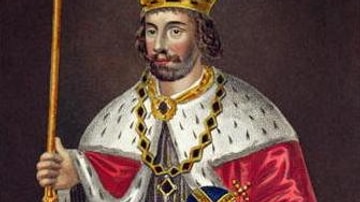
Edward II of England
Edward II of England reigned as king from 1307 to 1327 CE. Succeeding his father Edward I of England (r. 1272-1307 CE), his reign saw a disastrous defeat to the Scots at Bannockburn in June 1314 CE, and the king's lack of...

Definition
Zorvanism
Zorvanism (also given as Zuvanism, Zurvanism) was a sect of the Persian religion Zoroastrianism which emerged in the late Achaemenid Empire (c. 550-330 BCE) and flourished during the Sassanian Empire (224-651 CE). It is often referenced...
Definition
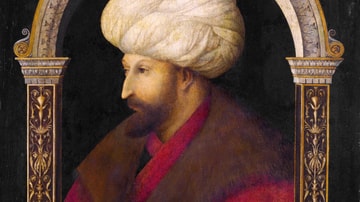
Mehmed II
Mehmed II (1432-1481 CE), also known as Mehmed the Conqueror, was the seventh and among the greatest sultans of the Ottoman Empire. His conquests consolidated Ottoman rule in Anatolia and the Balkans, and he most famously triumphed...
Definition
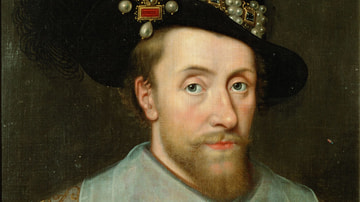
James I of England
James I of England (r. 1603-1625), who was also James VI of Scotland (r. 1567-1625), was the son of Mary, Queen of Scots, and he unified the thrones of Scotland and England following the death of Queen Elizabeth I of England...

Definition
Giovanni Boccaccio
Giovanni Boccaccio (1313-1375) was an Italian poet, writer, and scholar. His most famous and influential work is the Decameron, completed by 1353, in which his ten characters present 100 tales of everyday life. The book covers...

Definition
King's Evil
The king’s evil (from the Latin morbus regius meaning royal sickness), more commonly known as scrofula or medically tuberculous lymphadenitis, was a skin disease believed to be cured by the touch of the monarch as part of their inherited...

Definition
Adolf Hitler
Adolf Hitler (1889-1945) was the dictator of Nazi Germany from 1933. He gained power by making popular promises like improving Germany's economy and status in Europe, but when he took these policies too far, he was responsible more...

Definition
Tsar
Tsar (also czar) is a Slavic term derived from the Latin caesar. Ivan III (Ivan the Great) (r. 1462-1505) was the first Russian ruler to begin using the title of tsar during his reign instead of the title Grand Prince of Moscow. His grandson...

Definition
Ship Money - The Unpopular Tax
Ship Money was a tax applied by medieval monarchs to English coastal communities to pay for ships for the Royal Navy and so ward off pirates and enemies of the state. During the reign of Charles I of England (r. 1625-1649...
