
Search
Did you mean: Tomb?
Remove Ads
Advertisement
Search Results
Image
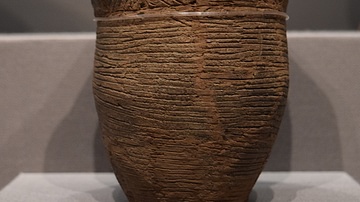
Jomon Vase
A Jomon vase, Japan. Jomon Period, 4000-3000 BCE. (Tokyo National Museum)
Image
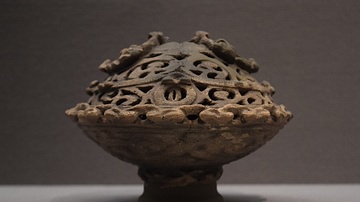
Jomon Incense Burner
A Jomon incense burner. Rokugo Ishinadate, Misato-cho, Akita, Japan. Jomon Period, 1000-400 BCE. (Tokyo National Museum)

Image
Landscape by Sesshu
A landscape ink and water painting by Sesshu (real name Toyo, 1420-1506 CE), one of the most important artists of Japan's Muromachi period (1333-1573 CE). This example was painted using the 'splashed-ink' technique. Hanging scroll, 1495 CE...
Image
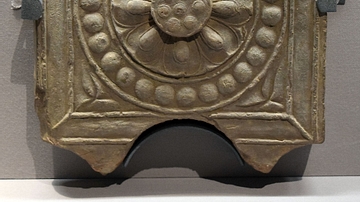
Asuka Period Roof Tile
A terracotta roof tile with lotus design. Japan, Asuka Period, 538-710 CE. From the ruins of Minamishigahaiji, Otsu-shi, Shiga. (Tokyo National Museum)

Image
Le Moulin de Blute-Fin by van Gogh
An 1886 oil on canvas painting, Le Moulin de Blute-Fin, by Vincent van Gogh (1853-90), the Dutch post-impressionist artist. Painted in Paris while van Gogh shared an apartment with his brother Theo. The artist made a whole series of paintings...
Image
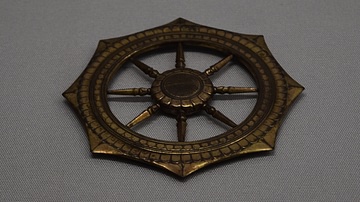
Japanese Dharma Wheel
A gilt bronze dharma wheel used in Buddhist rituals. 13th century CE. (Tokyo National Museum)
Image
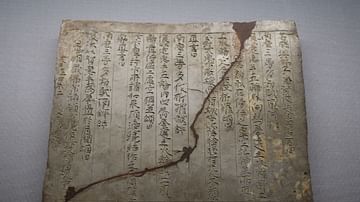
Japanese Tablet with Sutra Inscriptions
This clay tablet with sutra inscriptions was excavated at Komachizuka Sutra Mound in Tanga, which is located in Mie prefecture, Japan. It dates to 1174 CE (Jo'an 4). Important cultural property. (Tokyo National Museum)
Image
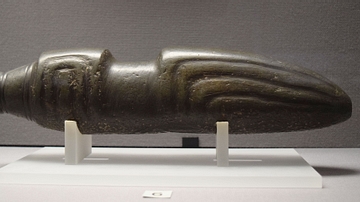
Jomon Period Stone Ritual Object
This stone ritual object comes from Japan and dates to the Jomon period, between 3000-400 BCE. (Tokyo National Museum)
Image
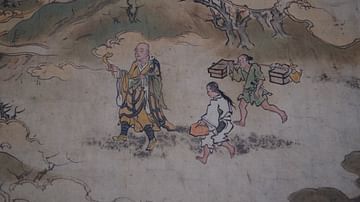
Hachiman, Illustrated Scroll
A scene from an illustrated scroll of the legends concerning Hachiman. Colour on paper. 14th century CE. (Tokyo National Museum)
Image
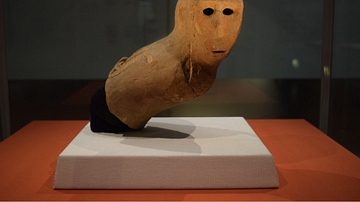
Monkey Haniwa
A terracotta haniwa (tomb marker) in the form of a monkey. 6th century CE, Kofun/Asuka Period. From Dainichizuka Tumulus, Okinosu, Namegata-shi, Ibaraki, Japan. 'Important Cultural Property'. (Tokyo National Museum)
