
Search
Did you mean: Goryeo?
Remove Ads
Advertisement
Search Results
Image
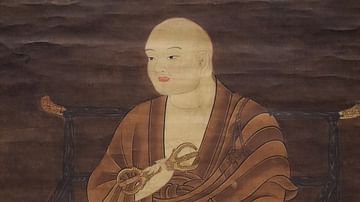
Kukai Silk Portrait
A painted silk portrait of Kukai or Kobo Daishi (774-835 CE) who was a scholar, poet, and monk who founded Shingon Buddhism in Japan. 14th century CE. (Tokyo National Museum)
Image
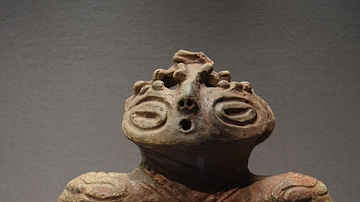
Jomon Stone Figurine
A Jomon stone figurine or gangu. Komukai, Nanbu-cho, Aomori, Japan. Jomon Period, 1000-400 BCE. (Tokyo National Musuem)

Image
Modern Noh Theatre Stage
Stage, Cerulean Tower Noh Theater, Tokyo, Japan.
Image
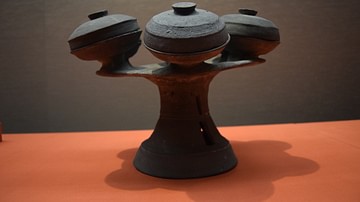
Japanese Stoneware Offering Vessel
An offering vessel of Sue stoneware. From Kanmuriyama Tumulus, Shimoashimori, Kita-ku, Okayama, Japan. Kofun Period, 6th century CE. (Tokyo National Museum)
Image
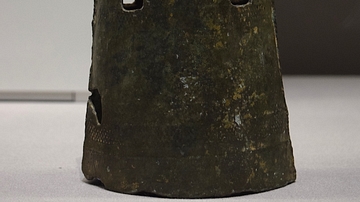
Dotaku Bell, Yayio Period
A bronze dotaku bell, Yayoi Period, 4th-2nd century BCE, Japan. (Tokyo National Museum)

Image
Portion of a Japanese Buddhist Sutra
This is a portion of the "Bussetsu zoho ketsugi kyo," which was a sutra copied by hand in ink on paper in 12th-century CE Japan. (Tokyo National Museum)
Image
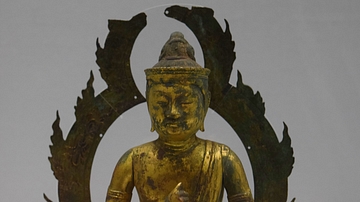
Japanese Statuette of Buddha
This Japanese statuette of Buddha dates from the 12th century CE and the Heian Period. It was excavated at Mt. Nachi in Wakayama, Japan, and it is made of gilt bronze. (Tokyo National Museum)

Image
Gilt-Bronze Horse Bit from Japan
This gilt-bronze horse bit was excavated from Kenzaki Otsuka, which is located in Japan's Gumna prefecture. It dates from the 6th century CE, during the Kofun period. (Tokyo National Museum)

Image
Haniwa Warrior
A haniwa (tomb marker) in the form of a warrior wearing Keiko armour. Iizuko-cho, Ota-shi, Gunma, Japan. Kofun Period, 6th century CE. National Treasure. (Tokyo National Museum)

Image
Sutra Inscribed Tablet
A clay tablet carrying a sutra inscription. From Komachizuka Sutra Mound, Tanga, Uraguchi-cho, Ise-she, Mie, Japan. Heian Period, dated 1174 CE. Important Cultural Property. (Tokyo National Museum)
