
Search
Remove Ads
Advertisement
Search Results

Image
Dolmen, Gochang, Korea
A Neolithic/Bronze Age dolmen at Gochang, Korea.
Definition
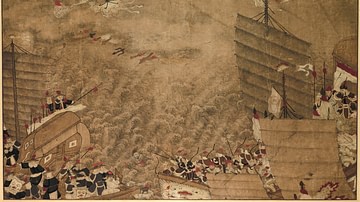
Wako - The Medieval Pirates of Southeast Asia
Wako (aka wokou and waegu) is a term used to refer to Japanese (but also including Chinese, Korean, and Portuguese) pirates who plagued the seas of East Asia from Korea to Indonesia, especially between the...

Definition
Bone Rank System
The Bone Rank System (Golpum or Kolpum) of ancient Korea was used in the Silla kingdom (57 BCE – 935 CE) in order to signal a person's political rank and social status. Membership of a particular rank within the system was extremely...

Definition
Carolingian Dynasty
The Carolingian Dynasty (751-887) was a family of Frankish nobles who ruled Francia and its successor kingdoms in Western and Central Europe during the Early Middle Ages. The dynasty expanded from Francia as far as modern Italy...
Article
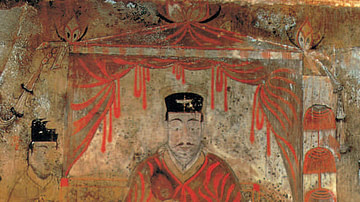
The Tombs of Goguryeo
Goguryeo (Koguryo) ruled northern Korea during the Three Kingdoms period from the 1st century BCE to 7th century CE, and the best evidence of the kingdom's prosperity and artistry can be found in the many surviving tombs of...
Image
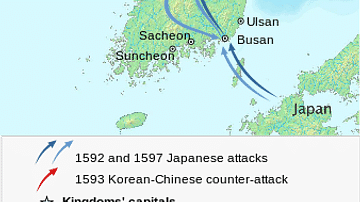
Map of Japanese Invasions of Korea, 1592-98 CE
A map showing the two Japanese invasions of Korea between 1592 and 1598 CE, otherwise known as the ‘Imjin Wars.’

Video
The Most Ancient Ruins of Korea - Dolmen : Gochang 고창 고인돌
In Korea, the total number of known dolmen is estimated to be around 30,000. Gochang(고창) is the largest Dolmen site in Asia which holds more than 447 dolmens and was officially registered with...

Image
Map of the Hellenistic Kingdoms after Alexander, c.301 BCE
The Hellenistic Successor Kingdoms (the Diadochi, from the Greek for “Successors”) emerged after the death of Alexander the Great in 323 BCE, when his vast empire fractured among his generals...

Definition
Ancient Japan
Ancient Japan has made unique contributions to world culture which include the Shinto religion and its architecture, distinctive art objects such as haniwa figurines, the oldest pottery vessels in the world, the largest wooden buildings...

Definition
Jang Bogo - Korea's King of the Yellow Sea
Jang Bogo (aka Chang Pogo or Gungbok) was a powerful Korean warlord, naval commander, and merchant who came to monopolise maritime trade in northeast Asia to such a degree that he was known as the 'King of...
