
Search
Remove Ads
Advertisement
Search Results
Image
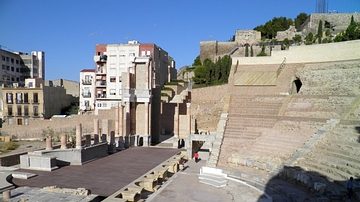
Roman Theatre of Carthago Nova
The theatre of Carthago Nova (Carthagena, Spain) was built between 5 BCE and 1 BCE. The date is known from the dedication of the building to Gaius and Lucius Caesar, grandsons and designated successors of Augustus.

Definition
Roman Verona
Verona, situated on the river Adige in northern Italy, was a Roman town probably founded some time in the 2nd century BCE. It was a colonia by 69 CE and the impressive monuments which survive to this day attest to the city's importance...

Definition
Andrea Palladio
Andrea Palladio (1508-1580 CE) was an Italian Renaissance architect most famous for the villas he designed in and around Vicenza and two large churches in Venice. Palladio blended elements of classical architecture, particularly...

Definition
Colosseum - Rome's Great Flavian Amphitheatre
The Colosseum or Flavian Amphitheatre is a large ellipsoid arena built in the first century CE by the Flavian Roman emperors of Vespasian (69-79 CE), Titus (79-81 CE) and Domitian (81-96 CE). The massive...

Definition
Ostia
Ostia (or Ostia Antica) lies 15 km from the city of Rome for which it served as the city's principal port and harbour throughout antiquity. The name derives from 'os' or 'ostium' which means 'mouth' and refers to the city's location at...

Definition
Sophocles
Sophocles of Kolōnos (c. 496 - c. 406 BCE) was one of the most famous and celebrated writers of tragedy plays in ancient Greece and his surviving works, written throughout the 5th century BCE, include such classics as Oedipus Rex...

Image
Roman Theatre of Dougga
Ruins of the ancient Roman theatre at Dougga, photograph by Carole Raddato, Tunisia, 04 October, 2024. The Theatre of Dougga, located in modern Tunisia, was completed around 166 CE during the reign of Antoninus Pius. The...

Definition
Tympanon
The tympanon (tympanum in Latin) was the most popular frame-drum in ancient Greek music, producing a loud rumbling sound not far from the sound of the orchestral timpani drums today. This percussion instrument was played mainly by women...

Article
Sports, Games & Entertainment in the Elizabethan Era
Leisure activities in the Elizabethan era (1558-1603 CE) became more varied than in any previous period of English history and more professional with what might be called the first genuine entertainment...

Article
Illyria - Exploring Ancient Albania
Albania is located at the crossroads of the eastern Adriatic and was known as Illyria and Epirus throughout the Classical era. It played a strategic role in ancient times and was a point of contact between Illyrian...
