
Search
Remove Ads
Advertisement
Search Results

Definition
Henry Lee III
Henry Lee III (1756-1818), more commonly known by his nickname 'Light-Horse Harry' Lee, was a cavalry officer in the Continental Army during the American Revolutionary War (1775-1783) and a politician who served as the ninth Governor...

Definition
Edward Elgar
Edward Elgar (1857-1934) was an English composer best known for his orchestral music and oratorios. Amongst Elgar's most-loved works are his Pomp and Circumstance marches which inspired the choral Land of Hope and Glory, a rousing...

Definition
Nabu - The Babylonian God of Wisdom and Writing
Nabu (sometimes known as Tutu) was the Babylonian god of wisdom, learning, prophecy, scribes, and writing, also responsible for the abundant harvest and all growing things. His name means "the Announcer,"...

Definition
Gustav Mahler
Gustav Mahler (1860-1911) was an Austrian-Bohemian composer best known for his song-cycles and his grand, sweeping symphonies, which often require expanded orchestras for their full performance. Mahler, a composer of Late-Romantic...

Definition
Battle of Neerwinden
The Battle of Neerwinden saw the major defeat of a French republican army by an allied force of Austrians and Dutch during the War of the First Coalition (1792-97), part of the broader French Revolutionary Wars (1792-1802...

Definition
Early Joseon Period
The Early Joseon Period (1392 - c. 1550 CE) in Korea was bookended by internal power struggles but witnessed major scientific and societal advances and prosperity. The Joseon (Choson) Dynasty ruled Korea from 1392 CE to 1897...

Definition
US Presidential Election of 1864 - The Election That Decided the Fate of the US Civil War
The Election of 1864 was one of the most important United States presidential elections of the 19th century. Occurring amidst the American Civil War (1861-1865), the election...

Definition
Johannes Brahms
Johannes Brahms (1833-1897) was a German composer of Romantic music best known for his symphonies, songs, and orchestral, chamber, and piano music. A great student of the history of music, Brahms was convinced that only by working...

Definition
Henry Clay - The Great Compromiser
Henry Clay (1777-1852) was an American lawyer and statesman, one of the defining political figures of his age. Over the course of his several decades on the stage of national politics, Clay helped lead the United...
Definition
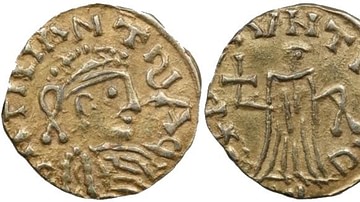
Guntram I of Orléans
Guntram I (also given as Gontrand, Gunthram, or Gunthchramn) was a Merovingian king who ruled over the Frankish kingdom of Orléans, later referred to as Burgundy, from 561 to 592. He often took on the role of mediator in the...
