
Search
Remove Ads
Advertisement
Search Results

Definition
Ancient Celts
The ancient Celts were various tribal groups living in parts of western and central Europe in the Late Bronze Age and through the Iron Age (c. 700 BCE to c. 400 CE). Given the name Celts by ancient writers, these tribes and their culture...

Article
Fish Sauce in the Ancient World
The production and trade of fish sauce in the ancient world was a significant and widespread industry, stretching from Britain to the Black Sea. Roman fish sauce, known as garum, was one of the most popular and commonly used ingredients in...

Image
476: The New Political Face of the Western Mediterranean
The map show the political situation within the western regions of the Mediterranean after the deposition of the last Western emperor, Romolus Augustulus, by Odoacer, the commander of the Italian imperial army. In reality, the Western Roman...
Image
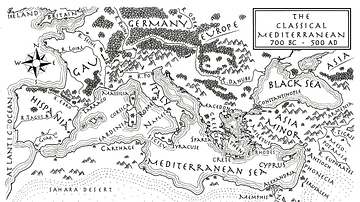
Mediterranean Map
Mediterranean Map from the novel The Jericho River.

Image
Map of Eastern Mediterranean in 1450 CE
Geopolitical climate in the Eastern Mediterranean before the conquest of Constantinople in 1453 CE.

Image
Empires of the Mediterranean, 218 BCE.
A map showing the various empires throughout the Mediterranean in 218 BCE.
Image
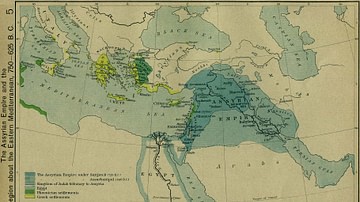
The Assyrian Empire and the Region about the Eastern Mediterranean, 750-625 BC
The Assyrian Empire and the Region about the Eastern Mediterranean, 750-625 BC.

Video
Pantheons of the Ancient Mediterranean: Crash Course World Mythology #7
In which Mike Rugnetta begins our unit on pantheons, which are families of gods. We further define pantheons and talk about why they're important. Then, we discuss pantheons from the myths of the ancient Mediterranean, starting with ancient...

Image
Some Active Trade Routes in the Bronze Age Mediterranean
A map detailing some of the active maritime trade routes in the Aegean during the Middle and Late Bronze Age.

Image
Byzantine Floor Mosaic from Eastern Mediterranean
This exceptional mosaic likely comes from the floor of a house or public building. It reflects the Late Romand and Early Byzantine taste for intricate and colorful designs. It dates from c. 325-350 CE and is made of limestone tesserae. The...
