
Search
Remove Ads
Advertisement
Search Results
Article
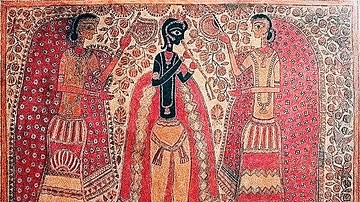
Madhubani Paintings: People’s Living Cultural Heritage
Mithila, a region in the state of Bihar, northern India (and also stretching into Nepal), has an important tradition of knowledge in the form of paintings. Madhubani paintings (also known as Mithila...
Definition
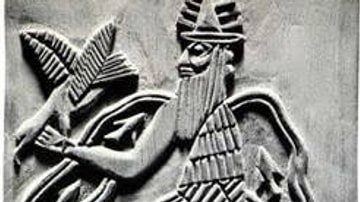
Enki - The Tricky Sumerian God of Wisdom
Enki (also known as Ea, Enkig, Dis, Nagbu, Nissiku Nudimmud) was the Sumerian god of wisdom, freshwater, intelligence, trickery and mischief, crafts, magic, exorcism, healing, creation, virility, fertility...

Definition
Library of Ashurbanipal
The Library of Ashurbanipal (7th century BCE) is the oldest known systematically organized library in the world, established in Nineveh by the Neo-Assyrian king Ashurbanipal (r. 668-627 BCE) to preserve the history and culture...

Article
Dogs & Their Collars in Ancient Mesopotamia - Man's Best Friend in the Ancient Near East
Among the many contributions to world culture credited to Mesopotamia is an object so familiar to people in the modern world that few pause to consider its origin: the dog...
Definition
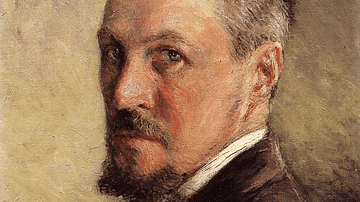
Gustave Caillebotte
Gustave Caillebotte (1848-1894) was a French impressionist painter noted for his draughtsmanship and flair for capturing perspective. He was particularly fond of scenes showing people at balconies and admiring views, often...

Definition
Ereshkigal - Mesopotamian Queen of the Dead
Ereshkigal (also known as Irkalla and Allatu) is the Mesopotamian Queen of the Dead, who rules the underworld. Her name translates as "Queen of the Great Below" or "Lady of the Great Place." She was responsible...

Definition
Nanshe - The Selfless Sumerian Goddess of Social Justice
Nanshe (also known as Nanse, Nazi) is the Sumerian goddess of social justice and divination, whose popularity eventually transcended her original boundaries of southern Mesopotamia toward all points...

Definition
Nabu - The Babylonian God of Wisdom and Writing
Nabu (sometimes known as Tutu) was the Babylonian god of wisdom, learning, prophecy, scribes, and writing, also responsible for the abundant harvest and all growing things. His name means "the Announcer,"...
Definition
Nehushtan
According to the Bible, Nehushtan was a metal serpent mounted on a staff that Moses had made, by God's command, to cure the Israelites of snake bites while wandering in the desert. The symbol of snakes on a staff or pole is a motif...

Article
Festivals in Ancient Mesopotamia - Courting the Goodwill of the Gods
Festivals in ancient Mesopotamia honored the patron deity of a city-state or the primary god of the city that controlled a region or empire. The earliest, the Akitu festival, was first...
