
Search
Remove Ads
Advertisement
Search Results

Definition
The Wasps
The Wasps is a play written by the lone representative of Ancient Greece's Old Attic Comedy, Aristophanes (c. 445 - c. 386 BCE). It won second place at the Lenaea competition in 422 BCE. Written in two acts, the play focuses on a reoccurring...
Definition
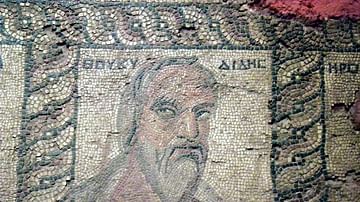
Thucydides
Thucydides (c. 460/455 - 399/398 BCE) was an Athenian general who wrote the contemporary History of the Peloponnesian War between Athens and Sparta, which lasted from 431 BCE to 404 BCE. However, Thucydides' History was never finished...

Definition
Brennus
Brennus (c. 390 BCE) was the Gallic war chief of the Senones who sacked and occupied Rome in 390 BCE. Nothing is known of him outside of the accounts given of this event which immortalized him as coining the phrase, “Woe to the Vanquished”...

Definition
Northern Cheyenne Exodus
The Northern Cheyenne Exodus (1878-1879) is the modern-day term for the attempt by the Northern Cheyenne under chiefs Morning Star (Dull Knife, l. c. 1810-1883) and Little Wolf (also known as Little Coyote, l. c. 1820-1904...
Definition
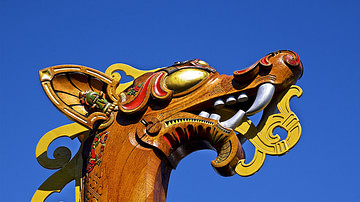
Beowulf
Beowulf is an epic poem composed in Old English consisting of 3,182 lines. It is written in the alliterative verse style, which is common for Old English poetry as well as works written in languages such as Old High German, Old Saxon...

Definition
Aztec Civilization - The Last Mesoamerican Empire
The Aztec Empire (c. 1345-1521) covered at its greatest extent most of northern Mesoamerica. Aztec warriors were able to dominate their neighbouring states and permit rulers such as Montezuma to impose...

Definition
Sir William Johnson
Sir William Johnson, 1st Baronet (l. c.1715-1774) was a British military officer, diplomat, and Superintendent of Indian Affairs. He was instrumental in aligning the Native Americans of New York with the British during the...

Definition
Odin
Odin (Old Norse: Óðinn) is the main god in Norse mythology. Described as an immensely wise, one-eyed old man, Odin has by far the most varied characteristics of any of the gods and is not only the deity to call upon when war was being...

Definition
Chushingura
Kanadehon Chushingura (A Treasury of Loyalty of Loyal Retainers or The Story of the Forty-Seven Samurai) is the most popular play in the history of Japanese theatre, first performed in 1748. It is a work of fiction, but the details...

Article
Chariots in Ancient Indian Warfare
The chariot was the elite arm of ancient Indian armies in the Vedic (1500 BCE – 1000 BCE) and Epic periods (described by the Ramayana and the Mahabharata, 1000-600 BCE) because of the advantages it conferred and...
