
Search
Remove Ads
Advertisement
Search Results

Article
Ancient Roman Society
Rome began as a small city on the banks of the Tiber River in Italy. The Latin tribes (also known as the Latini or Latians) inhabited the region c. 1000 BCE but the founding of the city is dated to 753 BCE. The family was...

Article
Hellenistic & Roman Agora of Athens
Pericles’ agora of Athens flourished under Macedonian control. After Macedon was defeated by Rome, the Romans added to the district even before Greece was taken as a province and more so afterwards. The Roman version...

Article
Roman Women in Business
Roman women faced legal, ideological, and cultural limitations in several areas of their lives; deep-rooted traditions regarding the role of women in the Roman world resulted in pre-conceived views which saw women characterised...
Image
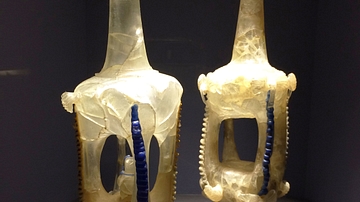
Bottles with Four Tubes from Roman Cologne and Trier
Four tubes are connected to the upper and lower portions of these ancient Roman glass bottles. The tubes were created by carefully cutting and bending the body of a free-blown glass bottle. Like similar...

Article
Legacy of the Ancient Romans
The legacy of the ancient Romans – from both the time of the Roman Republic (509-27 BCE) and the time of the Roman Empire (27 BCE - 476 CE) – exerted a significant influence on succeeding cultures and is still felt around...

Article
Family Planning in Greco-Roman Antiquity
Family planning was a topic of vital importance in the ancient Mediterranean. Some of the earliest medical literature from ancient Greece and Rome deals with fertility and reproductive health. Among the numerous...

Definition
Attila the Hun
Attila the Hun (r. 434-453 CE) was the leader of the ancient nomadic people known as the Huns and ruler of the Hunnic Empire, which he established. His name means "Little Father" and, according to some historians, may not have...

Article
Legions of Spain, Roman Africa & Egypt
The legions of Spain, Roman Africa, and Egypt did not see the intensity of action that prevailed elsewhere in Europe. However, the presence of these four legions - VII Gemina, IX Hispana, XXII Deiotariana, and...

Definition
Battle of Cannae
The Battle of Cannae (2 August 216 BCE) was the decisive victory of the Carthaginian army over Roman forces at Cannae, southeast Italy, during the Second Punic War (218-202 BCE). The Carthaginian general Hannibal Barca (l. 247-183...
Definition
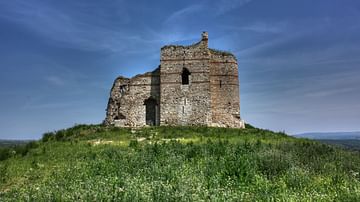
Fritigern
Fritigern (also Fritigernus, died c. 380 CE) was a Visigothic king best known as the victor of the decisive Battle of Adrianople in 378 CE, which decimated the Roman army and haunted Roman military commanders for decades afterwards...
