
Search
Remove Ads
Advertisement
Search Results

Definition
Picts
The Picts were a people of northern Scotland who are defined as a "confederation of tribal units whose political motivations derived from a need to ally against common enemies" (McHardy, 176). They were not a single tribe, nor necessarily...

Definition
Vandals
The Vandals were a Germanic tribe who are first mentioned in Roman history in the Natural History of Pliny the Elder (77 CE). The Roman historian Tacitus also mentions them in his Germania (c. 98 CE), though he also refers to them as...

Video
The Rise and Fall of the Roman Empire
The Roman Empire, at its height (c. 117), was the most extensive political and social structure in western civilization. Building upon the foundation laid by the Roman Republic, the empire became the largest and...

Article
Banking in the Roman World
Just as in other ancient civilizations, the first banks in Rome began in the temples consecrated to the ancient Gods. Many temples held in their basements the Romans' money and treasure, and were involved in banking activities...

Article
The Integration of Church and State in the Roman Empire
In the ancient world, "religion" and society were not separate entities. Various gods dictated covenants, "law-codes," and social conventions. Such law-codes were most often the responsibility of...

Interview
Interview: Rome Strategy of Empire by James Lacey
In this interview, World History Encyclopedia sits down with author James Lacey to chat about his new book Rome: Strategy of Empire published by Oxford University Press. Kelly: Can you tell us a little...

Definition
Mithridates VI
Mithridates VI (120-63 BCE, also known as Mithradates, Mithradates Eupator Dionysius, Mithridates the Great) was the king of Pontus (modern-day northeastern Turkey) who was regarded by his people as their savior from the oppression...
Article
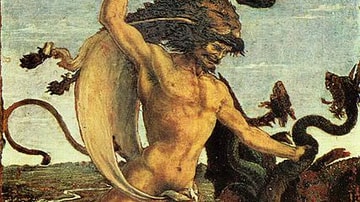
Mythological Re-Enactments in Ancient Roman Spectacle
To this day the ancient Romans remain infamous for their dramatic use of spectacle and other forms of entertainment. A lesser known variation of Roman spectacle is the mythological re-enactments that...

Article
Food in the Roman World
The ancient Mediterranean diet revolved around four staples, which, even today, continue to dominate restaurant menus and kitchen tables: cereals, vegetables, olive oil and wine. Seafood, cheese, eggs, meat and many types...

Article
Roman Tunnels
The first tunnels in the Mediterranean were built to transport water from distant springs and mountains to arid areas and cities. They also ensured the constant supply of water when cities were under siege. For example, the 533...
