
Search
Search Results

Definition
Atalanta - The Huntress of Greek Mythology
Atalanta is a figure from Greek mythology famed as a huntress, wrestler, and runner. The heroine was a key participant in the Calydonian boar hunt, striking the first wound in this fearsome beast with her bow. Long-determined to remain a...
Definition
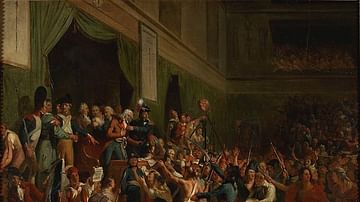
Prairial Uprising
The Uprising of 1 Prairial Year III (20 May 1795) was the last major popular insurrection during the French Revolution (1789-1799). It was the final time that the sans-culottes played an important role in French politics until the revolutions...

Article
Another Ariamanus Statue Found: The Evil Spirit of Mithraic Religion
It is rare when a new find creates renewed interest in an old subject. Here, the new find is a leontocephaline (lion-headed) figure of unknown provenance, weighing 5.8 kg and 37 cm in height with a width of 14 cm. Its base is partially broken...

Article
Visiting the London Mithraeum - Going Underground in Ancient Londinium
London, the proud capital of the United Kingdom, is visited by millions of tourists every year and is famous for its rich history and historical landmarks. Magnificent castles, medieval prisons, art and history museums as well as countless...

3D Image
Fragment of a Phrygian Stele-Door
Fragment of a stele-door, Middle of the 3rd century CE, Acmonia (Phrygia), western flank of the hill, Marble, Musée d'Art et d'Histoire (Musée du Cinquantenanire, Brussels, Belgium). Made with CapturingReality. The remains of the frame...

3D Image
Phrygian Funeral Altar, 4th Century CE
Marble funeral altar (Bômos) from Roman-era Phrygia, 313-314 CE. The decoration of the four faces is composed of the following elements, which are made difficult to read due to vandalism by Christians. a) A medallion representing...

3D Image
Phrygian Funerary Stele Depicting Toiletries
Funerary stele depicting toiletries, 175 CE, Acmonia (Phrygia, Turkey), marble. Musée du Cinquantenaire (Brussels, Belgium). Made with CapturingReality. On the upper left panel of the double door, the keyhole is clearly visible. The door...
Image
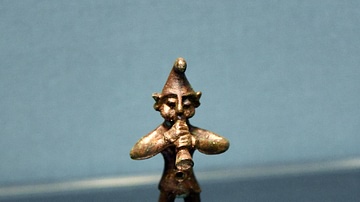
Bronze Figurine of a Trumpeter
This male trumpeter wears a pointed hat and a short kilt. From Phrygia or Lycia, Central or Western Turkey. 8th to 6th century BCE. (The British Museum, London).

Article
Clothes in Medieval England
As in just about any other period of history, clothing in the Middle Ages was worn for necessity, comfort, and display. Bright colours and rich decorations made for a striking medieval wardrobe, at least among the wealthy, although there...

Article
The Armour of an English Medieval Knight
English medieval knights wore metal armour of iron or steel to protect themselves from archers and the long swords of opponents. From the 9th century CE, chain mail suits gave protection and freedom of movement until solid plate armour became...
