
Search
Remove Ads
Advertisement
Search Results

Definition
Jezebel
Jezebel (d. c. 842 BCE) was the Phoenician Princess of Sidon who married Ahab, King of Israel (r. c. 871 - c. 852 BCE) according to the biblical books of I and II Kings, where she is portrayed unfavorably as a conniving harlot who corrupts...
Image
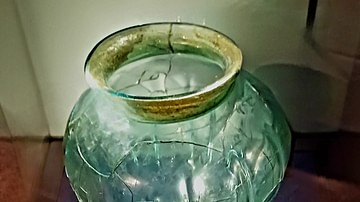
Roman Blue-Glass Cinerary Urn from Luguvalium
Roman blue-glass cinerary urn, from Luguvalium (Botchergate, Carlisle), 1st century CE. Carlisle Cathedral. Burning the body after death and keeping the bones and ashes in the cineraria (funerary urns...

Image
Stela of Kulamuwa with Phoenician Inscription
Plaster mould of a stela found in Sam'al (modern Zincirli, Turkey), dated to 825 BCE. It shows king Kulamuwa alongside a long inscription in Phoenician writing. In his left hand, the king holds a lotus...

Image
Phoenician Bronze Bowl from Nimrud
Over 150 bronze bowls were found in a palace at the city of Nimrud. These bowls were made in Phoenicia (modern-day Lebanese and Syrian coasts), and were brought to Nimrud as tribute or booty by one of the kings...

Article
Top 5 Archaeological Sites in Lebanon
Home to some of the Middle East’s most majestic ancient ruins, Lebanon has a rich and varied heritage with over 5,000 years of recorded history. Over the millennia, different conquering empires have left their...

Image
Roman Two-handled Glass cup
Roman glass two-handled cup. 1st-2nd century CE. Provenance unknown. (Archaeological Museum of Pavia, Italy).
Image
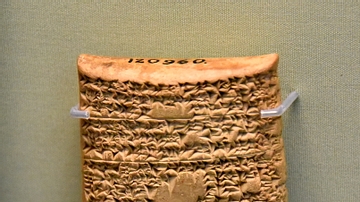
Mesoptamian Tablet Describing Glass Manufacture
From the cuneiform inscriptions on this clay tablet we can conclude that recipes for making red glass were written with a made-up ancient date to give the impression of authority. Circa 1400-1200 BCE...

Image
Roman Glass Kantharos
A Roman glass kantharos. 1st-2nd century CE. Provenance unknown. (Archaeological Museum of Pavia, Italy).

Image
Roman Glass Two-handled Cup
Roman glass two-handled cup. 1st-2nd century CE. Provenance unknown. (Archaeological Museum of Pavia, Italy).

Image
Roman Glass Perfume Containers
Roman spherical perfume containers in coloured glass. 1st-2nd century CE. Provenance unknown. (Archaeological Museum of Pavia, Italy).
