
Search
Remove Ads
Advertisement
Search Results
Image
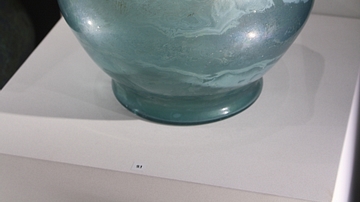
Glass Funerary Urn, Tarentum
A glass funerary urn, Tarentum, southern Italy. 1st-2nd century CE. (National Archaeological Museum of Taranto, Italy)

Image
Roman Glass Bottle
Roman glass bottle. 1st-2nd century CE. Provenance unknown. (Archaeological Museum of Pavia, Italy).
Image
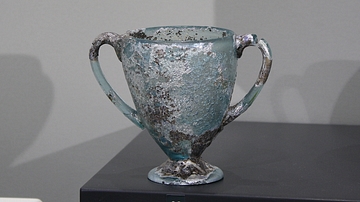
Roman Two-handled Glass Cup
A two-handled glass cup from Roman Tarentum, southern Italy. 1st century BCE. (National Archaeological Museum of Taranto, Italy)

Image
Roman Glass Two-Handled Cup
Roman glass two-handled cup. 1st-2nd century CE. Provenance unknown. (Archaeological Museum of Pavia, Italy).

Image
Phoenician Alphabet
The Phoenician alphabet.

Image
Phoenician Small Ship
An Assyrian relief from King Sargon II's palace at Khorsabad showing a Phoenician ship transporting cedar logs. This type of vessel was probably used for coastal work and transporting goods to shore from larger cargo vessels...

Image
Phoenician-Punic Ship
A Phoenician-Punic ship from a relief carving on a 2nd century CE sarcophagus

Image
Map of Tartessos with Phoenician and Greek colonies
A map of Tartessos, showing its sphere of influence, as well as Greek and Phoenician colonies in southern Spain.

Image
Phoenician Ship in a Storm
Artist's rendition of a Phoenician ship at sea during a storm. The Phoenicians were a great maritime people and often adorned their ships with horses' heads to honour Yamm, their god of the sea. Although Yamm could raise...

Image
Phoenician Sailors
Artist's impression of Phoenician seafarers leaving port. The Phoenicians were famous around the Mediterranean for their naval trade, exploration and colonization. Created by Amplitude Studios for the video game Humankind.
