
Search
Remove Ads
Advertisement
Search Results
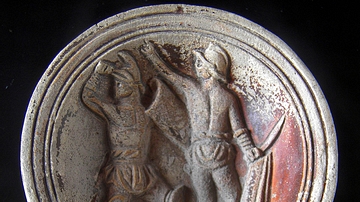
Image
Terracotta oil lamp with gladiators
Terracotta oil lamp depicting a gladiatorial scene of saluting or requesting missio (raising two fingers in surrender), first half of 1st century CE. (on display in the Colosseum, Rome)
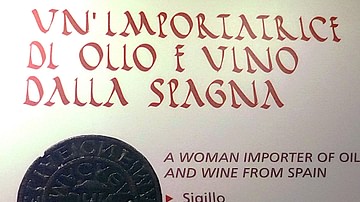
Image
Seal of a Female Importer of Oil and Wine
Bronze seal mentioning the name, in Latin and in Greek letters, of Coelia Mascellina, daughter of Cnaeus, a female importer of oil and wine from Spain, 2nd CE.
Museo Nazionale Romano, Roma, Italy.

Image
Terracotta Oil Lamp with Mars
Terracotta oil lamp depicting Mars riding a chariot. It dates from the 2nd century CE. (Staatliche Antikensammlungen, Munich)

Image
Silla Ceramic Oil Lamp
A ceramic oil lamp from the Silla kingdom of ancient Korea. 5-6th century CE. (National Museum of Natural History, Washington, DC, USA)

Image
Oil Bottle with Tragic Mask
Red-figured squat lekythos (oil-bottle) with a tragic mask (perhaps Electra's) and a stage.
Made in Lucania, Italy, c. 360-320 BCE.
British Museum, London.
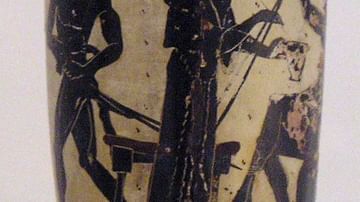
Image
Circe On a 490–480 BCE Oil Jar, Athens-National Archaeological Museum
Circe and Odysseus, white-ground lekythos by the Athena Painter, ca. 490–480 BCE. From Eretria. National Archaeological Museum in Athens, 1133.
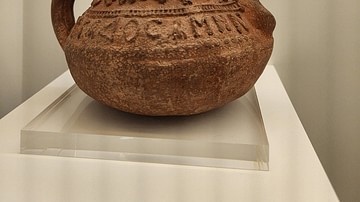
Image
Oil Lamp with Running Animals & Greek Inscription
From a workshop in Upper Egypt.
The Greek inscription says "The Holy and Consubstantial Trinity Amen."
4th-5th century CE. Made from clay. (Hellenic Museum, Melbourne, Victoria).

Article
Slavery in Plantation Agriculture
The first plantations in the Americas of sugar cane, cocoa, tobacco, and cotton were maintained and harvested by African slaves controlled by European masters. When African slavery was largely abolished in the mid-1800s, the center of plantation...

Article
Colour & Technique in Renaissance Painting
There were three principal painting techniques during the Renaissance: fresco, tempera, and oils. In all of these techniques, colour was an important part of the painter's armoury, allowing them to create images that would strike a chord...

Article
Wall Reliefs: Apkallus of the North-West Palace at Nimrud
Religion is the sigh of the oppressed creature, the heart of a heartless world, and the soul of soulless conditions. It is the opium of the people. (Karl Marx, Critique of Hegel's Philosophy of Right). When it comes to religion, many people...
