
Search
Remove Ads
Advertisement
Search Results
Image
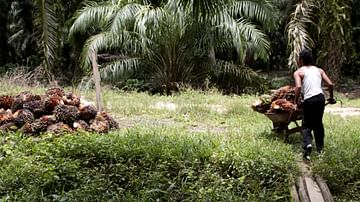
Oil Palm Harvester
Oil palm harvester in Indonesia
Photo by Lucy McHugh/CIFOR.
Image
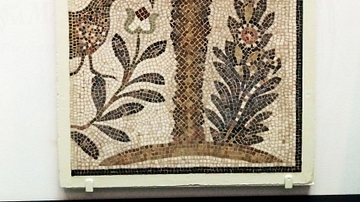
Jewish Mosaic of a Date Palm
This mosaic was once part of the mosaic found in an ancient synagogue in what's present-day Tunisia. This specimen dates from c. 550 CE and is made of stone and mortar. The date palm likely symbolized the Tree of Knowledge of Good and Evil...
Image
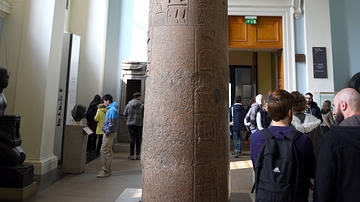
Palm-Leaf Column of Ramesses II, Pi-Ramesses
Palm-leaf column from Bubastis (Tell Basta), Temple of Baset; originally from Pi-Ramesses (Qantir), Egypt, 19th Dynasty, reign of Ramesses II (1279-1213 BCE) and 22nd Dynasty, reign of Osorkon II (874-850 BCE). In Ramesses II's reign, this...
Image
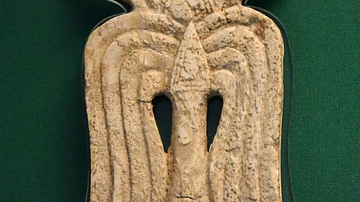
Nimrud Ivory Plaque of a Stylized Palm Tree
This ivory plaque shows a carving of a stylized palm tree. There are tenons at the top and bottom of the plaque. The overall depiction is very similar to a fragment found in Samaria (also housed in the Museum). Excavated by Sir Max Mallowan...
Image
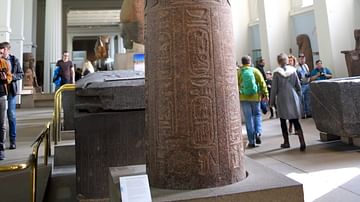
Palm-leaf Column of Ramesses II from Herakleopolis
This column is from a temple primarily dedicated to he dam god Heryshef of Herakleopolis. Ramesses II is twice shown making offerings to a local form of Osiris. The god wears his typical feather crown but is in a kilt not his usual mummy...

Article
The Olive in the Ancient Mediterranean
Olives and olive oil were not only an important component of the ancient Mediterranean diet but also one of the most successful industries in antiquity. Cultivation of the olive spread with Phoenician and Greek colonization from Asia Minor...
Image
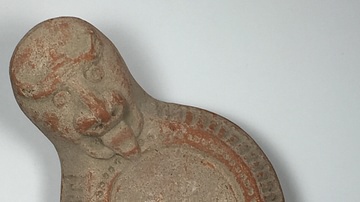
Egyptian Oil Lamp
This is a terracotta oil lamp with orange clay and dull orange slip. It features a hollow handle in the form of a gorgon's head. This is a decorative example of the type of oil lamp that was used to light one’s home. 2nd century CE. Provided...

Image
A Whale Oil Refinery at Smeerenburg, Svalbard
The whale oil refinery of the Amsterdam chamber of the Greenland Company on Amsterdam Island off the coast of Spitsbergen. Oil on canvas, 1639.
Image
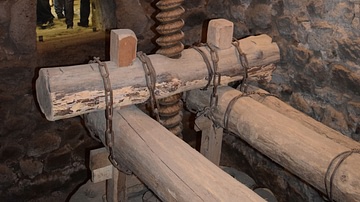
Oil Mill at Tatev Monastery
The oil mill at Tatev Monastery used to provide oil from hemp, lineseed, and sesame to monks and inhabitants who lived within a short distance from the monastery.
Image
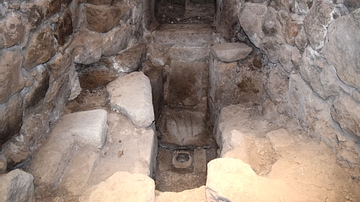
Tatev Monastery's Oil Mill
Oil mills have existed in Armenia since the Urartian era, and their archaeological remains can be found in all regions of Armenia. This oil mill at Tatev Monastery in Armenia dates from the 17th century CE.
