
Search
Did you mean: Anubis?
Remove Ads
Advertisement
Search Results
Definition
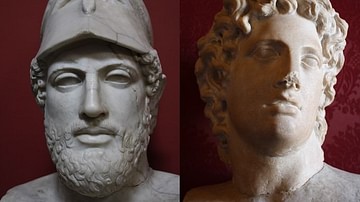
Plutarch
L. Mestrius Plutarchus, better known simply as Plutarch, was a Greek writer and philosopher who lived between c. 45-50 CE and c. 120-125 CE. A prodigious and hugely influential writer, he is now most famous for his biographical works...

Definition
Roman Gaul
Roman Gaul is an umbrella term for several Roman provinces in western Europe: Cisalpine Gaul or Gallia Cisalpina, comprised a territory situated in the northernmost part of the Italian peninsula ranging from the Apennines in the...

Definition
Galatia
Galatia was a region in north-central Anatolia (modern-day Turkey) settled by the Celtic Gauls c. 278-277 BCE. The name comes from the Greek for "Gaul" which was repeated by Latin writers as Galli. The Celts were offered the region by...
Definition
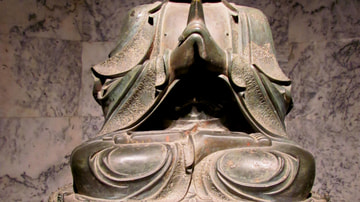
Esoteric Buddhism
Esoteric Buddhism is the mystical interpretation and practice of the belief system founded by the Buddha (known as Sakyamuni Buddha, l. c. 563 - c. 483 BCE). It is known by several names and is characterized by a personal relationship...

Definition
Marduk - The Great God of Babylon
Marduk was the patron god of Babylon who presided over justice, compassion, healing, regeneration, magic, and fairness, although he is also sometimes referenced as a storm god and agricultural deity. He rose to prominence...
Definition
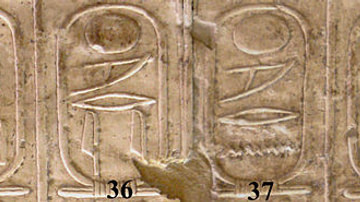
Nitocris
Nitocris (2184-2181 BCE) is the Greek name for Nitiqret, the last monarch of the 6th Dynasty of Egypt which concluded the period of the Old Kingdom (c. 2613-2181 BCE). Nitocris is best known from the story told of her by Herodotus (484-425/413...

Definition
Poseidon
Poseidon was the Greek god of the sea and rivers, creator of storms and floods, and the bringer of earthquakes and destruction. He was perhaps the most disruptive of all the ancient gods but he was not always a negative force. He was...

Definition
Kami
In the Shinto religion kami is an all-embracing term which signifies gods, spirits, deified mortals, ancestors, natural phenomena, and supernatural powers. All of these kami can influence people's everyday lives and so they are worshipped...

Definition
Mount Fuji - Japan's Tallest and Most Sacred Mountain
Mt. Fuji (Fujisan) is the tallest mountain in Japan and, with its classically symmetrical snow-capped cone, has long been the symbol of that country. The volcano is regarded as a sacred kami or spirit...
Definition
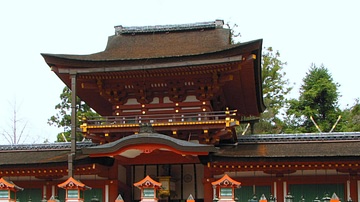
Kasuga Taisha
Kasuga Taisha is an ancient Shinto shrine located in a forest east of Nara, capital of Japan between 710 and 784 CE. Founded in 768 CE, the site has four main shrines in honour of four Shinto-Buddhist deities, one of which is the...
