
Search
Remove Ads
Advertisement
Search Results
Article
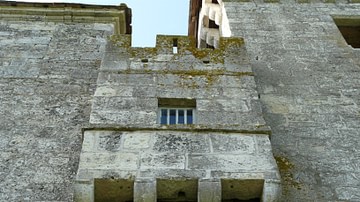
Toilets in a Medieval Castle
The medieval toilet or latrine, then called a privy or garderobe, was a primitive affair, but in a castle, one might find a little more comfort and certainly a great deal more design effort than had been invested elsewhere. Practicality...

Article
Unam Sanctam: Spiritual Authority & the Medieval Church
The Unam Sanctam (1302) was a papal bull issued by Pope Boniface VIII (served 1294-1303) requiring the complete submission of all people, including kings, to the authority and dictates of the pope. As the Church was understood as holding...

Article
Two Accounts of Zwingli's Death
Huldrych Zwingli (l. 1484-1531) died in the second of the Kappel Wars in 1531, a conflict between Catholic and Protestant forces. Afterwards, two accounts of his death emerged – one Catholic and one Protestant – differing in detail and notable...

Article
The Household Staff in an English Medieval Castle
An English medieval castle, if a large one, could have a household staff of at least 50 people, which included all manner of specialised and skilled workers such as cooks, grooms, carpenters, masons, falconers, and musicians, as well as a...

Article
The Violent and Mysterious Death of Christopher Marlowe
On the evening of 30 May 1593, the sounds of a heated argument could be heard emanating from a boarding house in Deptford, a district of London on the south bank of the River Thames. Two of the boarders were quarreling over which of them...

Definition
Edward III of England
Edward III of England reigned as king from 1327 to 1377. Succeeding his father Edward II of England (r. 1307-1327) following his enforced abdication and then murder, Edward III would take revenge on his father's enemies, who included the...

Article
Diversity in Church Architecture in Medieval England
Medieval English churches differed in size and layout. Their original and evolving role(s), financial and material resources, and architectural fashions helped determine variability. However, their look ultimately grew from a constant symbiosis...

Article
The Gold Trade of Ancient & Medieval West Africa
West Africa was one of the world's greatest producers of gold in the Middle Ages. Trade in the metal went back to antiquity but when the camel caravans of the Sahara linked North Africa to the savannah interior, the trade really took off...

Article
Martial Arts in Medieval Japan
There were 18 martial arts (bugei or bujutsu) in medieval Japan, and these included use of weapons, unarmed self-defence techniques, swimming, and equestrian skills. Initially designed to hone the skills of warriors for greater success on...

Article
Death of Alexander the Great
In June of 323 BCE, Alexander the Great (r. 336-323 BCE) died in Babylon. His sudden death before his 33rd birthday has long been a point of speculation: was it disease, old wounds, or murder? Regardless of the cause, history ranks him as...
