
Search
Remove Ads
Advertisement
Search Results

Article
Day of the Dead
The Day of the Dead, known in Spanish as Día de los Muertos, is a holiday that celebrates life and honors the dead through traditions, food, decorations, and activities intended to sustain the connections between the living and...

Article
Hummingbirds in Aztec Culture - Warriors, Survivors, & the Namesakes of Gods & Kings
Hummingbirds, called huitzillin ("wee-TZEEL-een") in the Nahuatl language of the Aztecs, are one of the most recognizable and striking species in the avian world. While these...

Article
We are now World History Encyclopedia
Ancient History Encyclopedia has now been around for almost twelve years. Since then, over 136 million people have used our website to learn about history, making it one of the most-read history publications in...
Interview
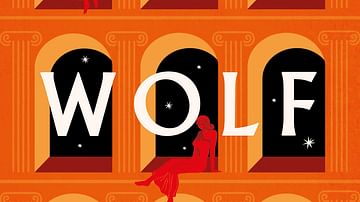
Interview: The Wolf Den by Elodie Harper
In this interview, World History Encyclopedia is joined with Elodie Harper, the author of the novel The Wolf Den. Kelly (WHE): Do you want to start us off by telling us what the book is about? Elodie Harper...

Article
Gibbon's Decline & Fall of the Roman Empire
The English historian Edward Gibbon (1737-1794) wrote and published his seminal work History of the Decline and Fall of the Roman Empire between 1776 and 1788. The dominant theme of Gibbon's six-volume work...

Article
4 Women of the French Revolution
The French Revolution (1789-1799) sought to dismantle the oppressive society of the old regime and build a new world based on the principles of "Liberty, Equality, Fraternity". This push for societal change led to...

Article
Ashurbanipal's Collection of Sumerian and Babylonian Proverbs
Ashurbanipal's collection of Sumerian and Babylonian proverbs formed part of the famous Library of Ashurbanipal (7th century BCE) established at Nineveh for the express purpose of preserving...

Article
Daily Life in Ancient Mesopotamia - Mirroring the Modern World
Daily life in ancient Mesopotamia cannot be described in the same way one would describe life in ancient Rome or Greece. Mesopotamia was never a single, unified civilization, not even under...

Article
Roman Education
Roman education had its first 'primary schools' in the 3rd century BCE, but they were not compulsory and depended entirely on tuition fees. There were no official schools in Rome, nor were there buildings used specifically for...

Article
Dogs & Their Collars in the Age of Enlightenment - From "Machines" to Pampered Pets
In medieval and Renaissance Europe, dogs were considered little more than "machines" which performed certain tasks, such as guarding a home or tracking game, but this view changed...
