
Search
Did you mean: Clovis I?
Remove Ads
Advertisement
Search Results

Definition
Sophocles
Sophocles of Kolōnos (c. 496 - c. 406 BCE) was one of the most famous and celebrated writers of tragedy plays in ancient Greece and his surviving works, written throughout the 5th century BCE, include such classics as Oedipus Rex...

Definition
Sepoy
A sepoy was an Indian soldier in the armies of various states and European trading companies in the Indian subcontinent and then, from the second half of the 19th century, in the British Indian Army. Recruited from many different population...

Definition
Shiva
Shiva (Siva) is one of the most important gods in Hinduism and a member of the holy trinity (trimurti) with Brahma and Vishnu. Shiva is a complex character who may represent goodness and benevolence, and he serves as the Protector. Shiva...

Definition
Pontius Pilate
Pontius Pilate was the fifth magistrate to serve in the Roman province of Judea, created in 6 CE by Roman emperor Augustus (r. 27 BCE to 14 CE). His term of office was during the subsequent reign of Tiberius from 26-36 CE. He became...
Definition
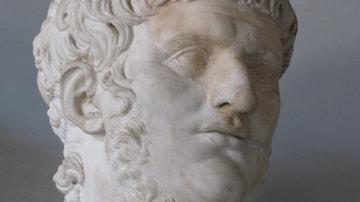
Nero - The Artist Emperor
Nero (37-68 CE) was the fifth Roman emperor, who reigned from 54 to 68 CE. The last emperor of the Julio-Claudian Dynasty, he came to power at the age of 16 with the help of his mother, Agrippina the Younger. Initially...

Definition
Scientific Revolution
The Scientific Revolution (1500-1700), which occurred first in Europe before spreading worldwide, witnessed a new approach to knowledge gathering – the scientific method – which utilised new technologies like the telescope...

Definition
Nike - Greek Goddess of Victory
The ancient Greek goddess Nike was the personification of the ideal of victory. Such personifications of ideal terms were common in ancient Greek culture; other examples include Wisdom, Knowledge, and Justice. Unlike...

Definition
Lycurgus
Lycurgus is considered the semi-mythical founder of classical Sparta and responsible for all of the city-state’s laws as well as its military and political institutions. He became better known to generations of Spartans as the lawgiver...

Definition
Gold in Antiquity
Gold, chemical symbol Au (from the Latin aurum meaning 'shining dawn'), is a precious metal which has been used since antiquity in the production of jewellery, coinage, sculpture, vessels and as a decoration for buildings, monuments...

Definition
Tughlaq Dynasty
The Tughlaq dynasty (also spelt Tughluq), ruled the Delhi sultanate from 1320 to 1413. Followed by the Khalji dynasty and preceded by the Sayyids, the Tughlaq dynasty formed an important period in the history and culture of the...
