
Search
Search Results

Definition
Year of the Four Emperors - When Four Men Battled For Control of the Roman Empire
The Year of the Four Emperors (69 CE) was a brief period of political upheaval and civil war in the Roman Empire. In the aftermath of the death of Emperor Nero, four men – Galba, Otho, Vitellius, and Vespasian – were recognized as emperor...

Definition
Roman Legionary
The Roman legionary was a well-trained and disciplined foot soldier, fighting as part of a professional well-organized unit, the legion (Latin: legio), established by the Marian Reforms. While major tactical changes appeared during the final...

Image
Roman Legions, Battle of Abritus
An artist's impression of the battle of Abritus, (251 CE), as depicted in the PC game Rome II: Total War - Empire Divided.

Definition
Herod the Great
Herod I, or Herod the Great (c. 75 – 4 BCE), was the king of Judea who ruled as a client of Rome. He has gained lasting infamy as the 'slaughterer of the innocents' as recounted in the New Testament's book of Mathew. Herod was, though, a...

Article
Authority in Ancient Rome: Auctoritas, Potestas, Imperium, and the Paterfamilias
Authority in ancient Rome was complex, and as one can expect from Rome, full of tradition, myth, and awareness of their own storied history. Perhaps the ultimate authority was imperium, the power to command the Roman army. Potestas was legal...

Definition
Kingdom of Israel
The Kingdom of Israel occupied that part of the land on the Mediterranean Sea known as the Levant which corresponds roughly to the State of Israel of modern times. The region was known, historically, as part of Canaan, as Phoenicia, as Palestine...
Definition
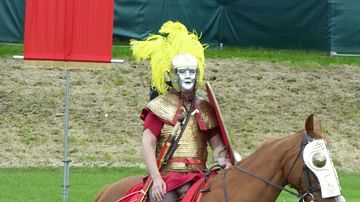
Roman Auxiliary Cavalry
The Roman army consisted of three separate divisions: the famed legions, the cavalry, and lastly, the auxiliaries. The auxiliaries (auxilia) were comprised of infantry cohorts, mounted infantry, and cavalry units or wings (alae). Although...

Definition
Palestine
Palestine in the ancient world was part of the region known as Canaan where the Kingdoms of Israel and Judah were located. The term `Palestine' was originally a designation of an area of land in southern Canaan which the people known as the...

Article
Hadrian's Travels
No other Roman emperor travelled as much as Hadrian (r. 117-138 CE). The 'restless' emperor spent more time travelling than in Rome, devoting half of his 21-year reign to the inspection of the provinces. His travels provided him with the...
Article
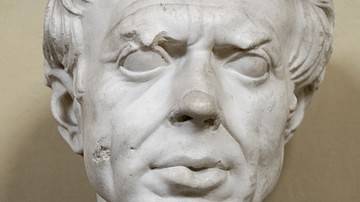
Marian Reforms
The Marian Reforms were a set of the reforms introduced to the Roman army in the late 2nd century BCE by Roman general and politician Gaius Marius (157-86 BCE). Through these reforms, the Roman army was transformed from a semi-professional...
