
Search
Remove Ads
Advertisement
Search Results
Image
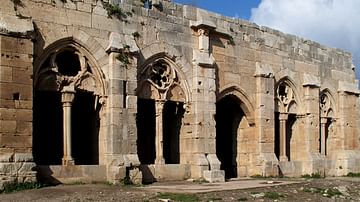
Hall of the Knights, Krak des Chevaliers
The Hall of the Knights at the castle of Krak des Chevaliers, Syria. Originally built for the Emir of Aleppo in 1031 CE, the castle was given to the Knights Hospitaller in 1144 CE, who extensively rebuilt it.

Definition
Crusader States
The Crusader States (aka the Latin East or Outremer) were created after the First Crusade (1095-1102) in order to keep hold of the territorial gains made by Christian armies in the Middle East. The four small states were the Kingdom...
Image
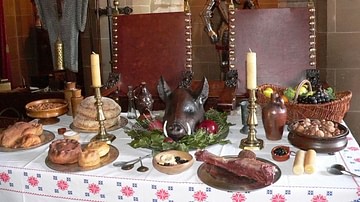
Medieval Dinner Table
A reconstruction of a typical medieval castle dinner table. Warwick Castle, U.K.

Image
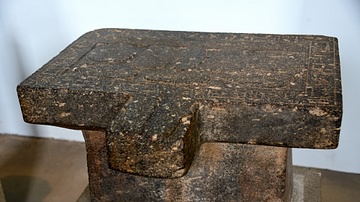
Table Dolmen, Ganghwa, Korea
A Bronze Age table dolmen on the island of Ganghwa, South Korea. c. 1000 BCE. Such structures were built above tombs of the elite.
Image
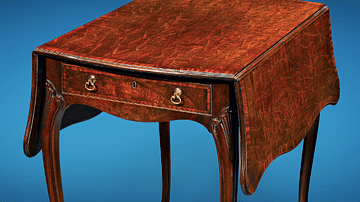
Pembroke Table by Chippendale
An 18th-century Pembroke table by the celebrated British furniture manufacturer Thomas Chippendale (1718–1779).

Image
Red Granite Offering Table of King Senusret III
Offerings were placed upon a reed mat, reproduced in stone as the offering tables of the Dynastic periods. On this royal example, the hieroglyph hetep "offering" is written on the surface. The sign comprises...
Image
Offering Table of Nesptah
This offering table, from a temple or a tomb, bears a depiction of a mat laid with food offerings; loaves, water vessels, and fowl. Ritual libations were poured over the images to purify them for the magical consumption...
Image
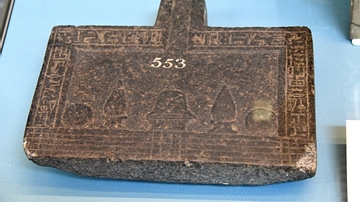
Egyptian Offering table of Amenemhat
The surface of this black granite offering table is carved in relief with images of food and drink offerings. From Egypt. 12th or 13th Dynasty, circa 1985-1750 BCE. (The British Museum, London)
Image
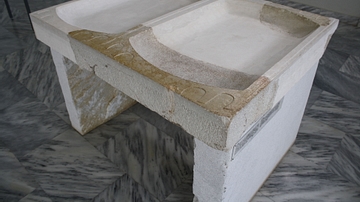
Sacrificial Table, Nemea
Restored stone table on which were placed the sacrificial offerings to the Gods in Greek religious practice. One tray was for the 'Epidaurian Gods' (Apollo & Esklepios), the other for Zeus. (c. 300 BCE). Nemea Archaeological...
Image
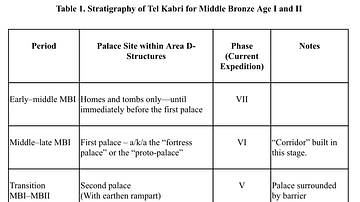
Table of Tel Kabri Stratigraphy
A table of Tel Kabri's stratigraphy for Middle Bronze Age I and II.
Source: Yasur-Landau et al. 2014, 356-364; Kempinski 2002, 4-5 Yasur-Landau et al. 2012, 3.
