
Search
Remove Ads
Advertisement
Search Results
Image
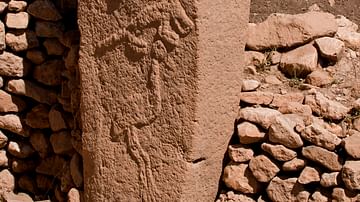
Göbekli Tepe - Layer III, Enclosure A, Pillar 2
Göbekli Tepe is a c. 12,000-year-old archaeological site in Anatolia, Turkey. The site chronology is divided into three levels, Layer I being the most recent and Layer III the oldest and deepest level...
Image
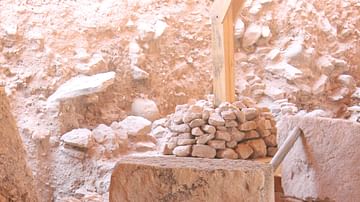
Göbekli Tepe: Pillar
T-shaped monolithic limestone pillar which contains carvings of animals as well as abstract characters and icons. (approx. 10,000 BCE)

Image
Palace of Facets Pillar
The central pillar of the Palace of Facets in the Kremlin, Moscow, Russia. The Palace of Facets was completed in 1492. Photo taken in 2007.

Image
Abacus of an Ashokan Pillar
Abacus of an Ashokan Pillar. Allahabad, Uttar Pradesh, India, 3rd century BCE.

Image
Pompey's Pillar
Pompey's Pillar, constructed 298-302 CE, Alexandria, Egypt.
Image
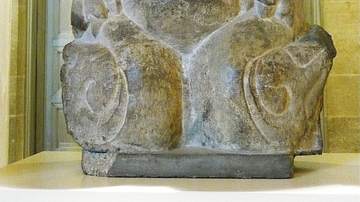
Chinese Pillar Support in the Form of a Kneeling Demon
This pillar support comes from the Buddhist caves at Xiangtangshan, Hebei Province, China and is shaped like a kneeling demon. It is made of limestone and dates from the era of the Northern Qi Dynasty...
Image
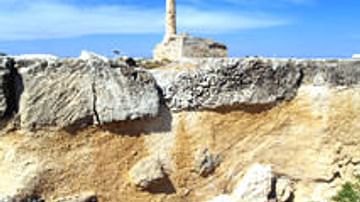
The Pillar of Apollo
The Pillar of Apollo on Kolona Hill, Aegina, Greece. The last remnant of the Temple of Apollo and Acropolis complex which stood on the site in the days of Aegina's glory.
Image
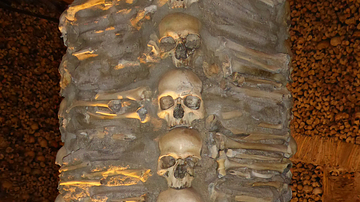
Capela dos Ossos Bone Pillar
Pillar at the Capela dos Ossos (Chapel of Bones), Evora, Portugal showing human skulls and bones. The Chapel of Bones was constructed by Franciscan monks in the late 16th century CE. Photo taken 2016 CE.
Image
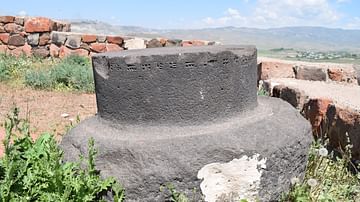
Basalt Pillar with Cuneiform, Armenia
An ancient balsalt pillar in the southeastern section of the Erebuni Fortress, located on the outskirts of present-day Yerevan, Armenia. (Erebuni Historical and Archaeological Preserve, Yerevan, Armenia.)

Video
Humayun's Tomb, Delhi (UNESCO/NHK)
This tomb, built in 1570, is of particular cultural significance as it was the first garden-tomb on the Indian subcontinent. It inspired several major architectural innovations, culminating in the construction of...
