
Search
Did you mean: Quran?

 This answer was generated by
 Search Results

Definition
Iranian Revolution
The Iranian Revolution (1978-1979) was the social movement that arose from widespread and diverse discontent with the monarchic government of Iran. The revolution was fought against the regime of Mohammad Reza Shah (r. 1941-1979), and it...
Image
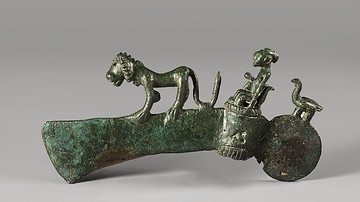
Bronze Axe Head Topped with a Man Ruling Animals from Western Iran
Bronze axe head topped with a man ruling animals, found in Saqqiz, Luristan, from Iron Age II (c. 1100-900 BCE). National Museum of Iran, Tehran. cc. no. 1434, photo by Neda Tehrani (Baloot Noghrei). Following the collapse of civilizations...
Image
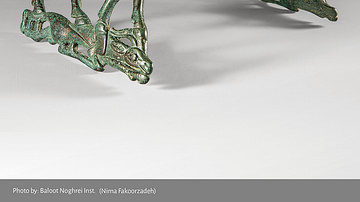
Bronze Horse Bit with Winged Goats from Western Iran
Luristan Bronze artefact from Iron Age II or III, c. 950-650 BCE. National Museum of Iran, Tehran. Acc. no. 3915, Photograph by Nima Fakourzadeh (Baloot Noghrei) In archaeology, the cast objects with bronze decorations obtained from the...

Video
Iran - Persian Architecture At its Best
Persian architecture has always been a source of pride for Iranians, attracting tourists from around the world to its unique features and remarkable achievements.

Image
Bronze Figurine with Babylonian Cuneiform Inscription from Western Iran
Bronze figurine with Babylonian cuneiform inscription found in Luristan Province, c. 1000-900 BCE (Iron Age II), National Museum of Iran, Tehran, inv. no. 1408. Photo by Neda Tehrani (Baloot Noghrei) The cultural influence of Mesopotamia...

Image
Early Elamite Clay Tablet with Numerical Signs from Southern Iran
Early Elamite clay tablet with numerical signs found in Tappeh Yahya, Kerman, dating to c. 3100 to 2900 BCE (Yahya Period IVc). National Museum of Iran, Tehran, inv. no. 4065. Photo by Nima Fakoorzadeh (Baloot Noghrei) Tappeh Yahya in...
Image
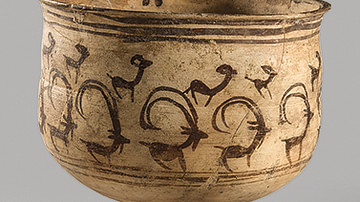
Terracotta Goblet with Gazelles and Ibexes from Shahr-e Sukhteh, Iran
Terracotta goblet with gazelles and ibexes, found in grave no. 725 in Shahr-e Sukhteh, southern Iran, Early Bronze Age, c. 2800-2400 BCE. National Museum of Iran, Tehran, acc. no. 12947. Photo by Nima Fakoorzadeh (Baloot Noghrei) Shahr-e...
Image
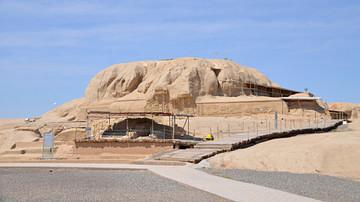
Tepe Sialk, Iran
Tepe Sialk is an archeological site (a tepe, "hill, tell") near Kashan in central Iran consisting of two hills with six main phases of occupation. The oldest settlements in Sialk date to around 6000–5500 BCE while the ziggurat was constructed...
Image
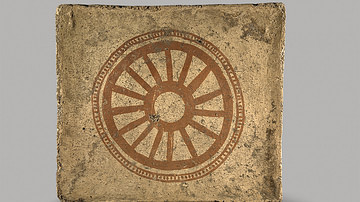
Painted Mural Tile with Wheel from Western Iran
Painted brick from Baba Jan, Luristan, Iron Age III, c. 850 to 550 BCE. National Museum of Iran, inv. no. 6735 This terracotta tile with a painted wheel is one of the c. 200 mural bricks that once decorated the “ceremonial rooms” of the...

Image
Chogha Zanbil Ziggurat, Iran
Chogha Zanbil is a magnificent, 3300-year-old ancient Elamite complex located 30 kilometres (18 miles) south-east of the ancient city of Susa in the Khuzestan province of western Iran. The principal element of this complex is an enormous...
