
Search
Did you mean: Quran?
Remove Ads
Advertisement
Search Results

Image
Chogha Zanbil Ziggurat, Iran
Chogha Zanbil is a magnificent, 3300-year-old ancient Elamite complex located 30 kilometres (18 miles) south-east of the ancient city of Susa in the Khuzestan province of western Iran. The principal element of this complex...
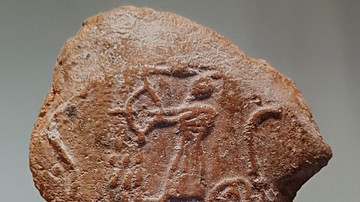
Image
Seal Impression of a Median Archer from Western Iran
Seal impression from Nushi Jan Castle Complex, c. 650 BCE. National Museum of Iran, Tehran, inv. no. 13145. Median art has few remaining examples and almost none that seem free from the impacts...
![Chogha Zanbil Ziggurat [East Side], Iran](https://www.worldhistory.org/img/c/p/360x202/10670.jpg?v=1779796397)
Image
Chogha Zanbil Ziggurat [East Side], Iran
View of the east side of the ziggurat of Chogha Zanbil with the southeastern stairway which provided access to the first terrace. Chogha Zanbil is a magnificent, 3300-year-old ancient Elamite complex located...
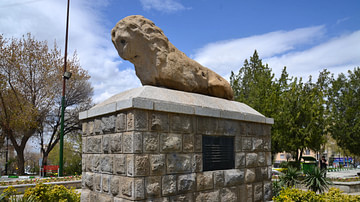
Image
Stone Lion of Hamadan, Iran
The Stone Lion of Hamadan, which once had a twin, was part of the old gate of the city of Ecbatana in Persia (modern-day Iran). According to some accounts, the lions were built upon the order of Alexander the Great (r...
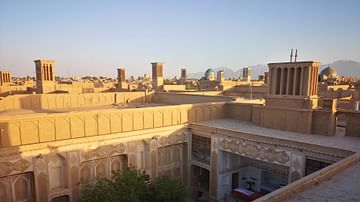
Image
Yazd, Iran
Yazd is the capital of Yazd Province in Iran. Nicknamed the "City of Windcatchers", Yazd is well known for its Zoroastrian fire temples, ab anbars (cisterns), qanats (underground channels) and yakhchals (coolers). Since 2017, the...
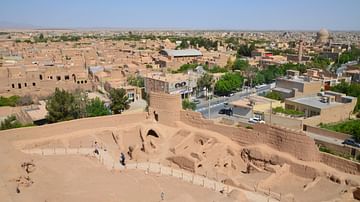
Image
View of Meybod from Narin Castle, Iran
Meybod is a desert city in the Yazd Province of Iran. It is an ancient city that goes back to the pre-Islamic era. In its stands Narin Castle, a mud-brick fort said to date from the time of the Achaemenids, although...
Image
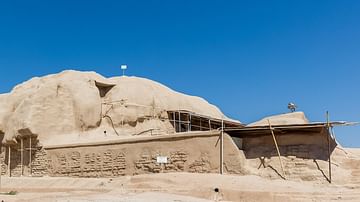
Ziggurat of Tepe Sialk, Iran
Ruins of the Ziggurat from Tepe Sialk, Iran.
Image
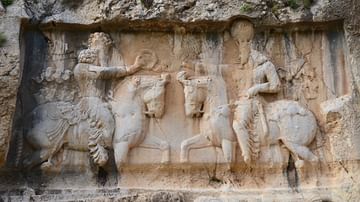
Carving of King Bahram I at Bishapur, Iran
Sasanian relief depicting the investiture of Bahram I (r. 273-276 CE), the fourth Sasanian King of Kings of Iran, Tang-e Chogan. Bahram I is depicted receiving the royal diadem from the Zoroastrian supreme...
Image
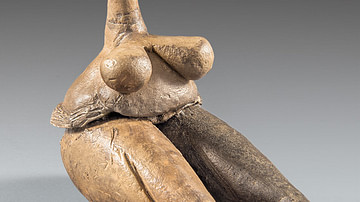
Neolithic Clay Figurine from West Iran
Neolithic clay goddess from Tappah Sarab, Kermanshah, 7000-6100 BCE. Clay figurines of female bodies with exaggerated reproductive organs are among the most common features of prehistoric sculpted art. With...

Image
The Assassins Alamut Castle, Iran
The castle of Alamut, Qazvin, Iran, one-time castle of the Assassins (aka Nizari Ismailis) before their destruction at the hands of the Mongols in the 1250s CE.
