
Search
Remove Ads
Advertisement
Search Results

Article
What Were the Consequences of WWII?
The consequences of the Second World War (1939-45) were many and varied. Nazi Germany, Fascist Italy, and military-dominated Japan were all defeated. Many occupied countries were liberated and regained their freedom...

Article
The Spice Trade & the Age of Exploration
One of the major motivating factors in the European Age of Exploration was the search for direct access to the highly lucrative Eastern spice trade. In the 15th century, spices came to Europe via the Middle...

Definition
Transatlantic Slave Trade - The Shame of Nations
The transatlantic slave trade (also given as the Atlantic slave trade, circa 1492 to 1860) was the practice of enslaving the citizens of African states and transporting them across the Atlantic Ocean to...

Definition
Portuguese Brazil
With a wealth of natural resources, Brazil was by far the most important colony in the Portuguese empire and was, at one time or another, the world’s leading producer of sugar, diamonds, and tobacco. Colonised from the 1530s...

Definition
Meiji Period
The Meiji period refers to the period in Japanese history from 1868 to 1912 during which the Meiji Emperor reigned. Following the overthrow of the Tokugawa shogunate in the Meiji Restoration of 1868, Japan's new leaders embarked...

Definition
Spanish Main
The Spanish Main refers, in its widest sense, to the Spanish Empire in the Americas from Florida in the north to the northern coast of Brazil in the south, including the Caribbean. The term was initially more limited and referred...

Definition
Buccaneer
The buccaneers were privateers who attacked enemies of their state, namely Spain, in the Caribbean and on the American coast (the Spanish Main) throughout the 17th century. Initially hunters and then seamen and soldiers, the buccaneers...

Definition
Hellenistic Period
The Hellenistic Period is a part of the Ancient Period for the European and Near Asian space. The use of this period is justified by the extent of the Hellenic culture in most of these areas, due to the Greek political presence...
Article
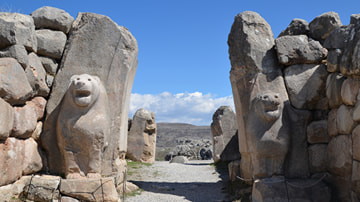
Five Key Historical Sites of the Hittites
Although mentioned several times in the Biblical texts, the actual existence of the Hittites was largely forgotten until the late 19th century CE. With the discovery of Hattusa in 1834 CE, the city that was...

Definition
Sanskrit
Sanskrit is regarded as the ancient language in Hinduism, where it was used as a means of communication and dialogue by the Hindu Celestial Gods, and then by the Indo-Aryans. Sanskrit is also widely used in Jainism, Buddhism, and Sikhism...
