
Search
Remove Ads
Advertisement
Search Results

Definition
Kingdom of Axum
The African kingdom of Axum (also Aksum) was located on the northern edge of the highland zone of the Red Sea coast, just above the horn of Africa. It was founded in the 1st century CE, flourished from the 3rd to 6th century CE...

Definition
John Cabot
John Cabot (aka Giovanni Caboto, c. 1450 - c. 1498 CE) was an Italian explorer who famously visited the eastern coast of Canada in 1497 CE and 1498 CE in his ship the Mathew (also spelt Matthew). Sponsored by Henry VII of England...
Article
The First Labor Strike in History
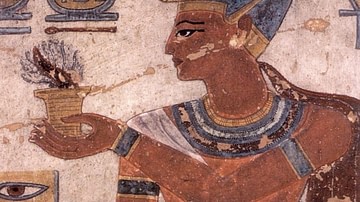
The most important cultural value in ancient Egypt was harmony; known to the Egyptians as ma'at. Ma'at was the concept of universal, communal, and personal balance which allowed for the world to function as it should...

Article
The Fall of Tenochtitlan
The fall of Tenochtitlan on 13 August 1521 was a decisive moment in the dramatic collapse of the Aztec empire which had dominated Mesoamerica. Led by Hernán Cortés (1485-1547), the Spanish conquistadors enjoyed superior...

Interview
Interview: Preclassic Maya
The genesis of Maya civilization in Mesoamerica was marked by an effervescence in the arts, the beginnings of their written language with glyphs, and a great attention to detail in the sphere of urban planning. Yet, despite...
Definition
Kikuyu People
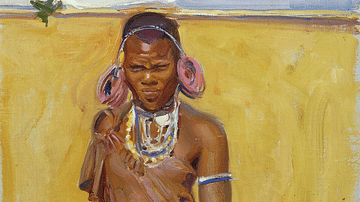
The Kikuyu people (aka Gikuyu or Agikuyu) are a Bantu-speaking people who occupied territory in what is today central Kenya in East Africa from the 17th century onwards. They established themselves primarily as agriculturalists...

Definition
Kingdom of Kanem
The Kingdom of Kanem (aka Kanim) was an ancient African state located in modern-day Chad, which flourished from the 9th to 14th century CE. With its heartland in the centre of the African continent on the eastern shores of Lake...

Definition
Juba II
Juba II (c. 48 BCE - 23 CE) was a Numidian prince and the king of Mauretania from c. 25 BCE until his death in 23 CE. He was raised in the household of Julius Caesar (c. 100-44 BCE) and married Cleopatra Selene II (40 - c. 17/5 BCE...

Definition
The Vedas
The Vedas are the religious texts which inform the religion of Hinduism (also known as Sanatan Dharma meaning “Eternal Order” or “Eternal Path”). The term veda means “knowledge” in that they are thought to contain the fundamental knowledge...

Definition
Songhai Empire
The Songhai Empire (aka Songhay, c. 1460 - c. 1591) covered what is today southern Mauritania and Mali. It replaced the Mali Empire (1240-1645) as the most important state in West Africa. Originating as a smaller kingdom along...
