
Search
Remove Ads
Advertisement
Search Results

Article
Etruscan Bronze Mirrors
The Etruscan civilization flourished in central Italy between the 8th and 3rd century BCE and produced distinctive art in the form of decorated pottery, figure sculpture, wall paintings, and the focus of this article, engraved...

Article
Etruscan Bronze Sculpture
The Etruscans produced bronze goods going back to the Villanovan period (1100-750 BCE) and used the material for all manner of objects, but it is their figure sculptures which have become some of the star attractions in...

Article
Sacred Cakes in Ancient Greece
Sacred cakes in ancient Greece were baked loaves, biscuits, pastries, and sponges sweetened with honey (meli) and prepared as unburnt offerings to the gods and goddesses and other divine beings. Unburnt offerings were...
Article
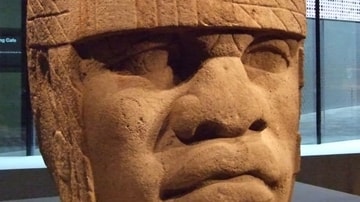
Olmec Colossal Stone Heads
The stone head sculptures of the Olmec civilization of the Gulf Coast of Mexico (1200 BCE - 400 BCE) are amongst the most mysterious and debated artefacts from the ancient world. The most agreed upon theory is that, because...

Article
Etruscan Tomb Paintings
The Etruscans flourished in central Italy from the 8th to 3rd century BCE, and one of their greatest legacies is the beautifully painted tombs found in many of their important towns. Tarquinia, Cerveteri, Chiusi, and Vulci...

Article
Ancient History Encyclopedia in Armenia
Last fall, Ancient History Encyclopedia (AHE) received a grant from the National Association for Armenian Studies and Research (NAASR) and the Knights of Vartan Fund for Armenian Studies to complete a grant...

Article
Minoan Jewellery
The jewellery of the Minoan civilization based on Bronze Age Crete demonstrates, as with other Minoan visual art forms, not only a sophisticated technological knowledge (in this case of metalwork) and an ingenuity of design but...

Article
Aztec Food & Agriculture
The Aztec civilization, which flourished in central Mexico between c. 1345 and 1521 CE, was able to provide an astonishingly wide range of agricultural produce thanks to a combination of climatic advantages, diverse artificial...

Video
Conquistadors and Aztecs - A History of the Fall of Tenochtitlan | Interview w/ Stefan Rinke
A highly readable narrative of the causes, course, and consequences of the Spanish Conquest, incorporating the perspectives of many Native groups, Black slaves, and...

Article
Cibola - The Seven Cities of Gold & Coronado
The Seven Cities of Cibola are the mythical lands of gold that the Spanish of the 16th century believed existed somewhere in the southwest of North America, comparable to the better-known mythical city of...
