
Search
Remove Ads
Advertisement
Search Results

Collection
Changing Worlds: Climate & Disaster in Antiquity
Although climate change has today become a much bigger and more globalized problem than in the past, ancient peoples did have to contend with local events that severely disrupted or even ended their way...

3D Image
Harappan Figurine
Fragment of a figurine from the Indus Valley showing the head and headdress. The female figure wears a “crown” with a high circular headpiece flanked by large panniers (the left one missing). Penn Museum Object Number: 67-29-7...

Video
Akrotiri and the Eruption of Thera: The Pompeii of the Aegean
Often referred to as the Pompeii of the Aegean, Akrotiri is a settlement that was completely covered by pumice after the eruption of Thera in the late 17th / early 16th century BCE. Thera, the...

Video
Conquistadors and Aztecs - A History of the Fall of Tenochtitlan | Interview w/ Stefan Rinke
A highly readable narrative of the causes, course, and consequences of the Spanish Conquest, incorporating the perspectives of many Native groups, Black slaves, and...
Article
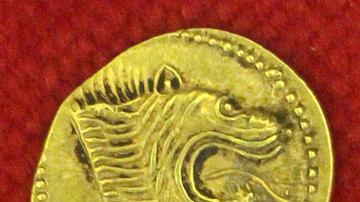
Etruscan Trade
The Etruscan civilization flourished in central Italy between the 8th and 3rd century BCE, and their prosperity was largely based on their exploitation of local mineral resources, both through manufactured goods and trade. The...

Interview
Interview: Korea-Japan Relations Through the Prism of Archaeology
Ancient East Asia was dominated by the three states known today as China, Japan, and Korea. The complex chain of successive kingdoms created a rich web of events that archaeologists have...

Article
Mycenaean Pottery
The pottery of the Mycenaean civilization (1550-1050 BCE), although heavily influenced by the earlier Minoans based on Crete, nevertheless, added new pottery shapes to the existing range and achieved its own distinctive decorative...

Article
Etruscan Society
The social organisation of the ancient Etruscans, a civilization which flourished in central Italy between the 8th and 3rd century BCE, can only be pieced together from a collection of rather unsatisfactory sources which, unfortunately...
Article
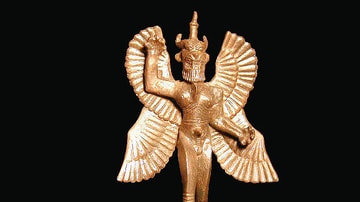
Twelve Menacing & Protective Mythological Figures
The term mythology comes from the Greek words mythos (“story of the people”) and logos (“word”) and so is defined as the spoken (later written) story of a culture. Modern scholars have divided myths...

Article
Minoan Frescoes
Frescoes are the source of some of the most striking imagery handed down to us from the Minoan civilization of Bronze Age Crete (2000-1500 BCE). Further, without written records, they are often the only source, along with decorated...
