
Search
Did you mean: Noah?
Remove Ads
Advertisement
Search Results

Article
Trade in the Phoenician World
The Phoenicians, based on a narrow coastal strip of the Levant, put their excellent seafaring skills to good use and created a network of colonies and trade centres across the ancient Mediterranean. Their major trade routes were by sea to...
Article
Roman Wall Painting
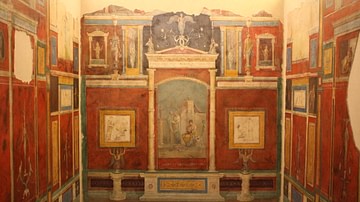
The interiors of Roman buildings of all description were very frequently sumptuously decorated using bold colours and designs. Wall paintings, fresco and the use of stucco to create relief effects were all commonly used by the 1st century...

Article
The Eleusinian Mysteries: The Rites of Demeter
The Rites of Eleusis, or the Eleusinian Mysteries, were the secret rituals of the mystery school of Eleusis and were observed regularly from c. 1600 BCE - 392 CE. Exactly what this mystic ritual was no one knows; but why the ancient Greeks...

Article
Beer in the Ancient World - The Drink of the Gods - For Some
The intoxicant known in English as beer takes its name from the Latin bibere (by way of the German bier), meaning "to drink", and the Spanish word for beer, cerveza, comes from the Latin word cerevisia for "of beer", giving some indication...

Article
The Nerge: Hunting in the Mongol Empire
The peoples of the Mongol Empire (1206-1368 CE) were nomadic, and they relied on hunting wild game as a valuable source of protein. The Asian steppe is a desolate, windy, and often bitterly cold environment, but for those Mongols with sufficient...

Article
Etruscan Bronze Sculpture
The Etruscans produced bronze goods going back to the Villanovan period (1100-750 BCE) and used the material for all manner of objects, but it is their figure sculptures which have become some of the star attractions in museums worldwide...
Article
Sydney Harbour Bridge Construction
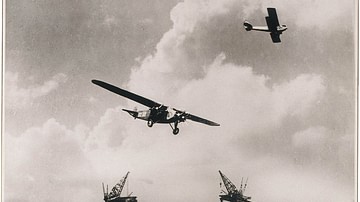
The Sydney Harbour Bridge – affectionately known as The Coathanger by Australians – was opened to great fanfare and a touch of scandal on 19 March 1932 and was the longest steel arch bridge in the world at the time, with a span of 503 metres...

Article
Wall Reliefs: Apkallus of the North-West Palace at Nimrud
Religion is the sigh of the oppressed creature, the heart of a heartless world, and the soul of soulless conditions. It is the opium of the people. (Karl Marx, Critique of Hegel's Philosophy of Right). When it comes to religion, many people...

Article
Hesiod on the Birth of the Gods
The Greek poet Hesiod (c. 700 BCE) is most famous for his works Theogony and Works and Days. In this passage from Theogony, Hesiod relates the birth of the gods from cosmic Chaos and follows the lineage through the great Zeus, King of the...

Article
Norse Alcohol & The Mead of Poetry
Alcohol played an integral part in Norse culture. People drank ale more than water because the brew had to be boiled as part of the process and so was safer to drink. The Norse of Scandinavia had four main types of fermented beverage: ale...
