
Search
Did you mean: Slavs?
Remove Ads
Advertisement

 This answer was generated by
 Search Results

Article
Roman Glass
Roman glassware includes some of the finest pieces of art ever produced in antiquity and the very best were valued higher than wares made with precious metals. However, plain glass vessels such as cups, bowls, plates, and bottles...
Image
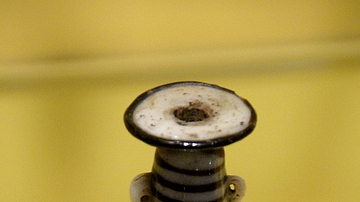
Glass Vessel Made by Core-forming Technique
Core-forming is one of the earliest glass-making techniques. The body of the vessel was shaped around a core. Colored trails of glass were wound around it, and the rim and handles added. the vessel was then...
Image
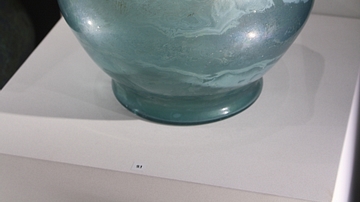
Glass Funerary Urn, Tarentum
A glass funerary urn, Tarentum, southern Italy. 1st-2nd century CE. (National Archaeological Museum of Taranto, Italy)
Image
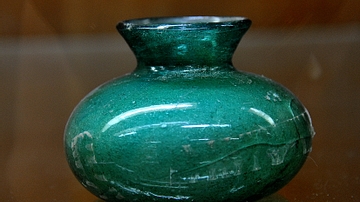
Glass Perfume Container
This perfume bottle was found in Mesopotamia and dates back to the early Islamic period, 7th-9th centuries CE. The Sulaimaniya Museum, Iraq.
Image
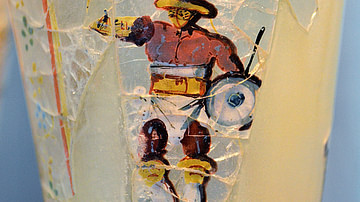
Glass with Painting of a Gladiator
A Roman gladiator painted on a glass beaker from Roman Egypt, 1st century CE. It is part of the Begram Treasure group of artefacts from the 1st-2nd century CE, discovered in the area of Begram in Afghanistan, which...
Image
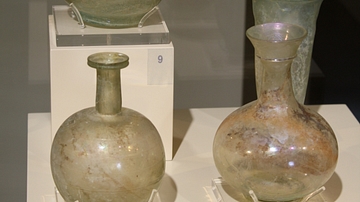
Glass Vases, Epidaurus
Glass vases from the necropolis of Epidaurus and Arkadiko, 1st century CE. Nafplio Archaeological Museum.
Image
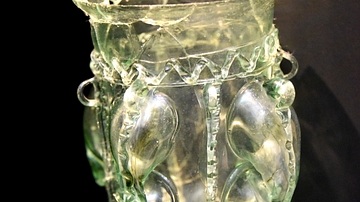
Glass Claw Beaker
This glass vessel, known as a claw beaker after its claw-like decoration, is an early example of a type that grew popular throughout Anglo-Saxon England. Its form is similar to Late Roman vessels, reflecting the cultural transitions...

Image
Glass Jar of Sargon II
This glass vessel was carved out of a solid block and the center was drilled out thereafter. Neo-Assyrian Period, reign of Sargon II, 721-705 BCE. From the North-West Palace at Nimrud, Northern Mesopotamia, modern-day Iraq...

Image
Glass Slipper
A glass slipper. (Disneyland, California)
Image
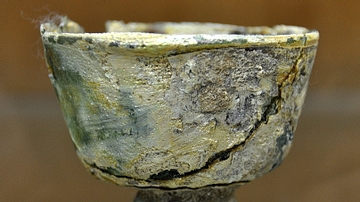
Glass Beaker for Ritual Services
This glass beaker was used for religious rituals and communal services and dates back to the Parthian/Sassanid period, 350 BCE to 636 CE. From Mesopotamia, modern-day Iraq. The Sulaimaniya Museum, Iraq.
