
Search
Did you mean: Slavs?
Remove Ads
Advertisement
Search Results
Image
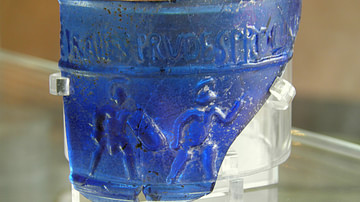
Glass Gladiator Cup
Fragment of a blue glass cup with a scene depicting a pair of gladiators fighting. The gladiators are identified by name in the Latin inscription above them: etraites (a murmillo) and Prudes (a Thracian), with part of the name...
Image
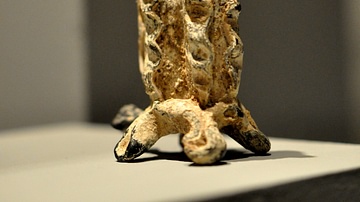
Glass Container on Quadruped
This glass container was mounted on a four-footed animal (turtle?) and was free-blown. From Mesopotamia, Iraq. 226-750 CE. The Sulaimaniya Museum, Iraq.

Article
The Stained Glass Windows of Chartres Cathedral
The 167 stained glass windows of Chartres Cathedral, built 1190-1220 CE, are the most complete group surviving anywhere from the Middle Ages. Several windows date to the mid-12th century CE while over...
Image
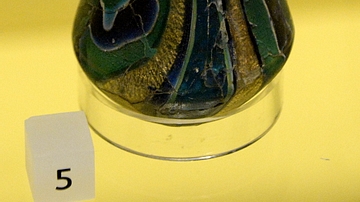
Luxury Glass Bottle
Ancient cast glass features a wide range of decoration, produced by fusing together different layers of colored glass. Mosaic patterns were created by cutting colored glass canes in cross-section, and marble glass was mould-blown...
Image
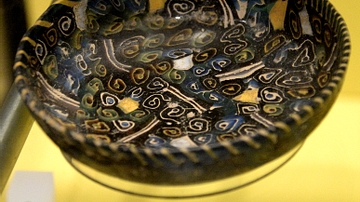
Luxury Glass Bowl
Ancient cast glass features a wide range of decoration, produced by fusing together different layers of colored glass. Mosaic patterns were created by cutting colored glass canes in cross-section, and marble glass was mould-blown...
Image
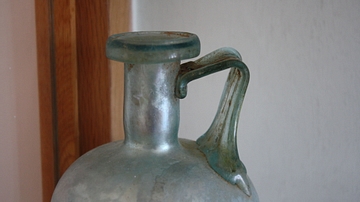
Roman Glass Bottle
A detail of the neck and handle of a Roman glass bottle (1st - 3rd century CE). The handle shows the common technique of adding handles separately and the folding over of the glass at the ends due to the glassmaker's lack of...
Image
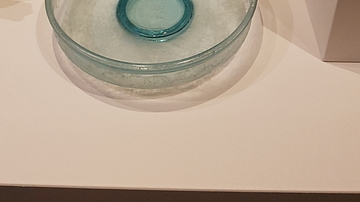
Clear Glass Dish from Pompeii
A clear glass dish from Pompeii. 1st century CE. (Photo taken at the National Maritime Museum, Sydney Australia) According to Pliny, high value was placed on colourless, transparent glass - basically that which...
Image
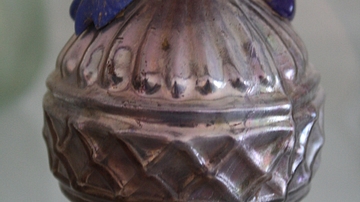
Roman Glass Vase
A Roman glass vase dating from the 1st to 3rd century CE. Glass vessels were often decorated so as to imitate more expensive metalware. (Naxos Archaeological Museum, Greece).
Image
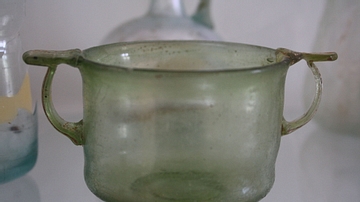
Roman Glass Cup
A Roman glass drinking cup, 1st - 3rd century CE. The shape and carved horizontal handles are typical of glass drinking cups of this period and their use was widespread throughout the Empire, even by those of more modest means...
Image
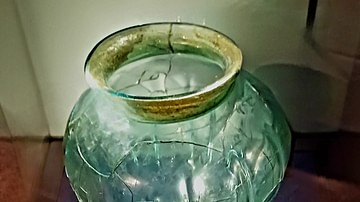
Roman Blue-Glass Cinerary Urn from Luguvalium
Roman blue-glass cinerary urn, from Luguvalium (Botchergate, Carlisle), 1st century CE. Carlisle Cathedral. Burning the body after death and keeping the bones and ashes in the cineraria (funerary urns...
