
Search
Remove Ads
Advertisement
Search Results

Image
Etruscan Bronze Warrior
An Etruscan bronze warrior statuette. Populonia, 5th century BCE. Height: 26 cm. (Metropolitan Museum of Art, New York)
Image
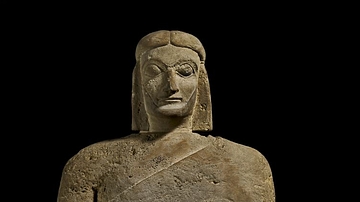
Etruscan Cinerary Urn, Chiusi
A stone cinerary urn which was hollow to receive the ashes of the deceased. The head acts as a stopper. Etruscan, Chiusi, 500-400 BCE. Height: 1.37 m. (British Museum, London)

Image
Etruscan Model House
A terracotta model of an Etruscan house or hut. From Cerveteri. (Louvre Museum, Paris)
Image
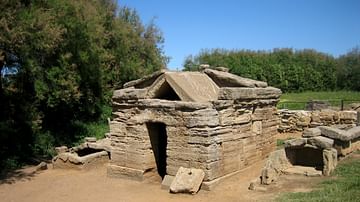
Etruscan Tomb at Populonia
A stone Etruscan tomb from Populonia, north-western Italy. It is known as the 'Tomb of the Bronze Statuette of the Offering Bearer' after a figurine bearing an offering was excavated there. 530-500 BCE.
Image
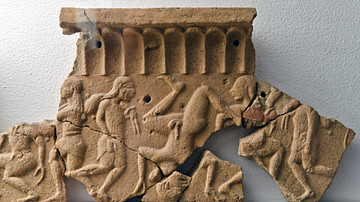
Etruscan Dancers, Acquarossa
A revetment plaque depicting dancers. Terracotta, Portico Building A, Acquarossa. 6th century BCE. (National Etruscan Museum of Viterbo, Italy)
Image
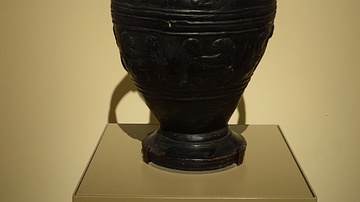
Etruscan Bucchero Vase
An Etruscan bucchero vase. Second half of the 6th century BCE. (Pushkin Museum, Moscow)

Image
Etruscan Model Liver For Divination
A bronze model of a sheep's liver which was used to train Etruscan priests so that they could divine meaning from the livers of sacrificed animals. The liver is divided into 40 sections with 24 gods named in the inscriptions. From Piacenza...

Image
Etruscan Terracotta Roof Decorations
A detail of the 19th century CE reconstructed Etruscan temple at the Villa Giulia Museum, Rome, showing the terracotta roof decorations which were common to Etruscan buildings.
Image
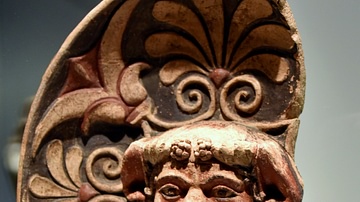
Etruscan Antefix from Cerveteri
Etruscan antefix with a head of Silen and anthemia nimbus from Cerveteri, Lazio, Italy. The roofs of Etruscan temples were decorated along their eaves with antefixes, ornamental tiles with figural reliefs. They were serially produced in large...
Image
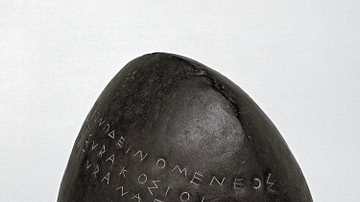
Etruscan Bronze Helmet
An Etruscan bronze helmet, 5th century BCE. Discovered at Olympia, it was dedicated there and carries an inscription: 'Hieron, son of Deinomenes, and the Syracusans, from Cumae'. Height: 20 cm. (British Museum, London)
