
Search
Remove Ads
Advertisement
Search Results

Article
Marcus Aurelius: Philosopher Emperor or Philosopher-King?
Co-authored by Steven Umbrello and Tina Forsee It is very common to hear in both academic circles, as well as more close-knit Stoic circles, Marcus Aurelius (121 – 180 CE) being referred to...

Definition
Diocletian
Diocletian was Roman emperor from 284 to 305 CE. After the defeat and death of the Roman emperor Philip the Arab in 249 CE, the empire endured over three decades of ineffective rulers. The glory days of Augustus, Vespasian, and Trajan...

Definition
Caligula - The First Mad Emperor of Rome
Caligula (12-41 CE) was the third Roman emperor, who reigned from 37 to 41 CE. A member of the Julio-Claudian Dynasty, he came to power after the death of his great-uncle Tiberius. The ancient sources claim...

Definition
Caracalla
Caracalla was Roman emperor from 211 to 217 CE. Born Lucius Septimius Bassianus, son of Septimius Severus and Julia Domna, he became co-ruler with his father in 198 CE and sole ruler after the death of his father in 211 CE and of his...

Video
Life of Emperor Titus #10 - The Good Emperor, Roman History Documentary Series
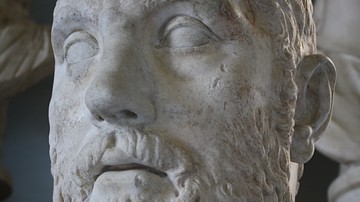
Emperor Titus was the first emperor to succeed his biological father on the imperial throne. He is considered to be one of the few good emperors. His short reign is best remembered...
Definition
Macrinus
Macrinus was Roman emperor from April 217 to June 218 CE. It is a story that has been told countless times before - an emperor is assassinated leaving no heir or successor. On April 8, 217 CE Roman Emperor Caracalla was murdered, supposedly...
Definition
Justinian II
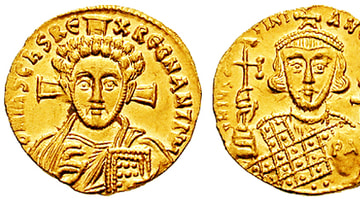
Justinian II “the Slit-nosed” ruled as emperor of the Byzantine Empire in two spells: from 685 to 695 CE and then again from 705 to 711 CE. It was after his first reign and prior to his exile that his nose was cut off by the usurper...

Definition
Year of the Four Emperors - When Four Men Battled For Control of the Roman Empire
The Year of the Four Emperors (69 CE) was a brief period of political upheaval and civil war in the Roman Empire. In the aftermath of the death of Emperor Nero, four men – Galba...

Article
Eunuchs in Ancient China
Eunuchs were powerful political players in ancient Chinese government. Originating as trusted slaves in the royal household they were ambitious to use their favoured position to gain political power. Advising the emperor...

Video
Marcus Aurelius: The Philosopher & Emperor of the Roman Empire
Marcus Aurelius (r. 161 to 180 CE) was a Roman emperor best known as the last of the Five Good Emperors of Rome (following Nerva, Trajan, Hadrian, and Antoninus Pius) and as the author of the...
