
Search
Remove Ads
Advertisement
Search Results

Definition
Constantine VII
Constantine VII was Byzantine emperor from 945 until 959 CE. Sometimes known as Constantine Porphyrogennetos because of his birth in the purple chamber of the royal palace, he was served by various regents from 912 CE until reigning...

Definition
Vespasian - The Commoner Who Became Roman Emperor
Vespasian (9-79 CE) was Roman emperor from 69 to 79 CE. Despite his low birth, he worked hard to rise through the ranks of Roman politics and eventually achieved prominence as a military commander. He...
Definition
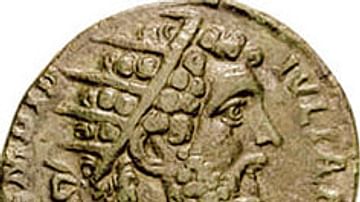
Didius Julianus
Didius Julianus was Roman emperor from March to June 193 CE. On March 28, 193 CE Roman Emperor Pertinax was assassinated by the Praetorian Guard, and like his predecessor Commodus, he left no apparent successor. Two possible claimants...
Definition
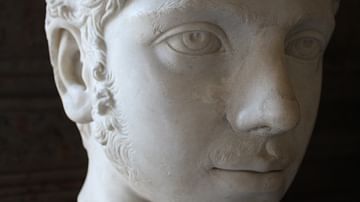
Elagabalus
Elgabalus was Roman emperor from 218 to 222 CE. Having failed to keep many of his promises to the army, Roman Emperor Macrinus (217 – 218 CE) was becoming increasingly unpopular, and it would only take a little lie from a young boy's...

Article
Mulan: The Legend Through History
Mulan (“magnolia”) is a legendary character in Chinese literature who is best known in the modern day from the Disney filmed adaptations (1998, 2020). Her story, however, about a young girl who takes her father's...

Image
Emperor Antoninus Pius
This is a marble bust of the Roman Emperor Antoninus Pius (reigned 138-161 CE). The Emperor wears military dress. This image of Antoninus Pius was created in the early years of his reign. The bust may be a replica made in...
Image
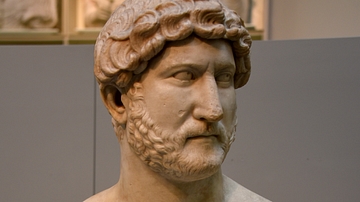
Marble Bust of Emperor Hadrian
Hadrian, like most Roman emperors, used statues to diffuse his image across the Roman World. Statues often showed the emperor as a general or priest. This bust shows Hadrian naked. This nakedness, originally a Greek...

Image
Gold ring with Coin of Emperor Marcus Aurelius
Roman gold coins were set into rings to be worn. Decorative frames were added to turn others into brooches. The image of the emperor was believed to be a good luck charm, so it made sense to carry it around...
Image
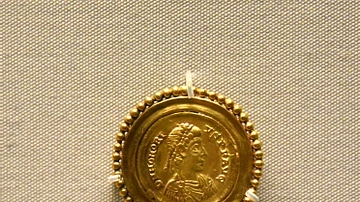
Brooch with Coin of Emperor Honorius
Roman gold coins were set into rings, to be worn. Decorative frames were added to turn others into brooches. The image of the emperor was believed to be a good luck charm, so it made sense to carry it around all...

Image
Bust of Emperor Marcus Aurelius from Lamunia
Marcus Aurelius was a Roman Emperor and reigned from 161-180 CE. He was the last emperor of the so-called "Five Good Emperors". Marble. Roman Period, 2nd half of the 2nd century CE. From the Village of Kindilli...
