
Search
Search Results
Definition
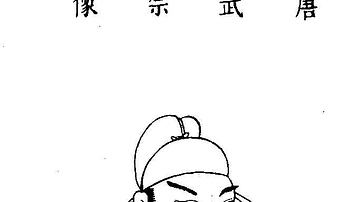
Emperor Wuzong of Tang
Wuzong of Tang (also Wu-Tsung, formerly Li Yan) reigned as emperor of China from 840 to 846 CE. He is best remembered today for his persecution of Buddhists, the worst such attack in all of China's history, and his early death by insanity...

Video
The History of Premodern Japan: Go Daigo Tenno and the Revolt Against Kamakura
In this lecture, the defeat of Go-Toba is explained, followed by the revolt against Kamakura in Pre-modern Japan.
By: Kanda University of International Studies.
Definition
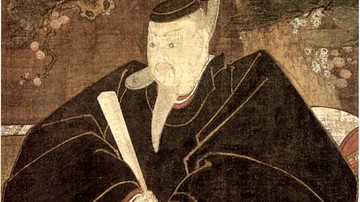
Tenjin
Sugawara no Michizane, aka Tenman Tenjin (845-903), was a scholar, poet, and high-level administrator in the Japanese court during the Heian Period. Badly treated and exiled, he would gain a spectacular revenge on his political rivals from...

Article
War of the Eight Princes
The War of the Eight Princes (291-306 CE) is the conflict which weakened and finally ended the Western Jin Dynasty (266-316 CE) in China and resulted in more far-reaching consequences throughout the country. The power of the Sima family was...

Article
Emperor Titus' Sole Mistake - A Mysterious Deathbed Confession
A little over two years into his imperial administration, the Roman emperor Titus (r. 79-81 CE) and a retinue of followers traveled to the Sabine countryside for a respite. As they made the overland journey, Titus quickly realized something...

Definition
Tang Dynasty
The Tang Dynasty (618-907 CE) was one of the greatest in Imperial Chinese history. It was a golden age of reform and cultural advancement which lay the foundation for policies which are still observed in China today. The second emperor, Taizong...

Article
Marcus Aurelius: Philosopher Emperor or Philosopher-King?
Co-authored by Steven Umbrello and Tina Forsee It is very common to hear in both academic circles, as well as more close-knit Stoic circles, Marcus Aurelius (121 – 180 CE) being referred to as the philosopher king. This is not an idea...

Definition
Medieval Japan
The medieval period of Japan is considered by most historians to stretch from 1185 to 1603 CE. Stand out features of the period include the replacement of the aristocracy by the samurai class as the most powerful social group, the establishment...

Definition
Mandate of Heaven
The Mandate of Heaven (Tianming), also known as Heaven's Mandate, was the divine source of authority and the right to rule of China's early kings and then emperors. The ancient god or divine force known as Heaven or Sky selected a particular...
Definition
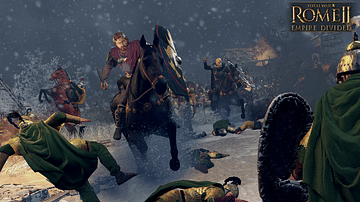
The Barracks Emperors
The “Barracks Emperors” is a term coined by later historians referring to the Roman emperors who were chosen and supported by the army during the period known as the Crisis of the Third Century (also known as the Imperial Crisis, 235-284...
