
Search
Remove Ads
Advertisement
Search Results
Article
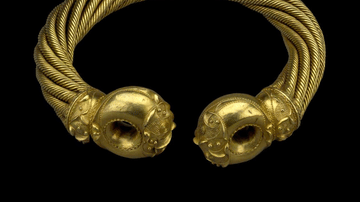
Ancient Celtic Torcs
In ancient Celtic cultures, torcs were a common form of jewellery and were made from bronze, copper, silver, and gold. Torcs were not just exquisite works of Celtic art but also identified the wearer’s status and perhaps were...

Article
Another Ariamanus Statue Found: The Evil Spirit of Mithraic Religion
It is rare when a new find creates renewed interest in an old subject. Here, the new find is a leontocephaline (lion-headed) figure of unknown provenance, weighing 5.8 kg and 37 cm in...
Article
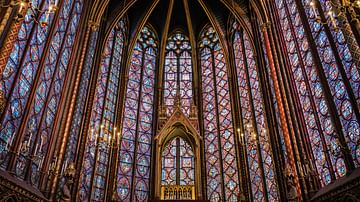
Louis IX and Capetian Politics at Paris' Sainte-Chapelle
The Sainte-Chapelle in Paris was originally consecrated as a private royal chapel in 1248 during the reign of King Louis IX of France (r. 1226-1270), who was known in life as rex christianissimus...
Article
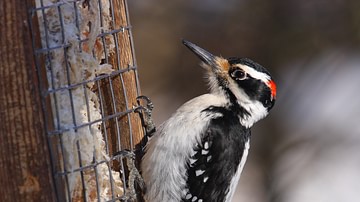
The Woodpecker's Mother-in-Law
The Woodpecker's Mother-in-Law is a Cheyenne tale which, like any other, is open to various interpretations but, among them, highlights the strength and autonomy of Cheyenne women. The old woman and her daughter each...

3D Image
The Elephant God Ganesha
The elephant god Ganesha, Like the dancing Shiva and goddess Parvati Ganesha was found in the soil in Tranquebar 1799. Bronze. South India. Approximately 1200th. The National Museum of Denmark (Copenhagen, Denmark). Made...

Video
Bernini Obelisk - Ancient Rome Live
The Bernini Obelisk (also known as the "Minervio" or "the Elephant and Obelisk") is a sculpture from Rome. The obelisk was originally from Sais, Egypt and was brought to Rome by Emperor Diocletian (r. 284-305 CE...

Video
When Money Talks: A History of Coins and Numismatics with Frank Holt
When Money Talks: A History of Coins and Numismatics by Frank Holt explores the history of coins from their first invention in ancient Lydia, all the way up to cryptocurrency and the future...

Image
Cleopatra Selene II, Boscoreale
The allegorical portrait on this silver emblema dish is attributed to Cleopatra Selene II (40 BCE–c. 5 BCE), the daughter of Cleopatra VII (69-30 BCE) and Mark Antony (83–30 BCE). She wears an elephant scalp as a headdress...

Image
Swiss Colonial Science
Swiss colonial science. Fritz and Paul Sarasin were scientists who travelled to British controlled Ceylon and Dutch ruled Celebes during the last decades of the 19th century. The elephant slain here had a calf that was shipped...
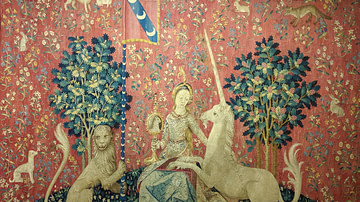
Image Gallery
The Lady and the Unicorn: Medieval Tapestries
The Lady and the Unicorn tapestries, housed at the Musée de Cluny in Paris, are a series of six exquisite medieval tapestries that are renowned for their beauty, craftsmanship, and mysterious symbolism...
