
Search
Did you mean: Dionysos?
Remove Ads
Advertisement
Search Results

Definition
Ajax (Play)
Ajax is a play written by the 5th-century BCE Greek poet and dramatist Sophocles. Although Sophocles wrote at least 120 plays, only seven have survived. Of his surviving plays, the best-known is Oedipus Rex (Oedipus the King) - part...

Definition
The Frogs
The Frogs is a comedy play by Aristophanes (c. 445 - c. 385 BCE), the most famous of the comic playwrights of ancient Greece. Named after the creatures who composed the play's chorus, it won first prize at the dramatic festival at...

Definition
Electra by Sophocles
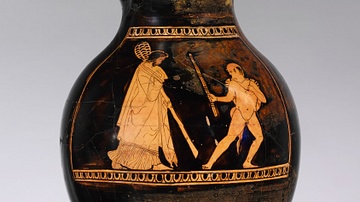
Electra is a play written by the 5th-century BCE Greek tragedian Sophocles. Similar to Aeschylus' Libation Bearers, Electra focuses on the return of Electra's brother Orestes from exile and the plot to murder their mother...
Definition
The Anthesteria
The Anthesteria celebrated two seemingly disparate things: wine and the dead. Both Dionysos and Hermes Chthonios (Hermes of the Underworld) were celebrated as part of this festival. In many ways, the Anthesteria is similar to...

Definition
Hippolytus
Hippolytus is a tragedy written by Euripides (c. 484-407 BCE), one of the great Greek playwrights of the early 5th century BCE. As with many tragedies of the era, the central focus of Hippolytus is humanity's relationship with the...

Definition
Cyclops (Play)
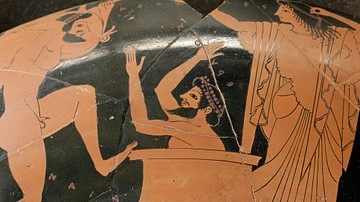
The satyr-play The Cyclops was written by Euripides, one of the great Greek tragedians, in 412 or 408 BCE. Like many of his fellow tragedians, Euripides centers his play on a well-known story from Greek mythology. The Cyclops is...
Definition
The Children of Heracles
The Children of Heracles (Heraclidae) is one of Euripides' lesser-known and least popular works, as is the myth surrounding the tragedy play. Its date is also uncertain, possibly written in the late 430s or early 420s BCE...
Definition
Lasus of Hermione
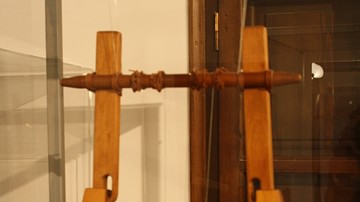
Lasus of Hermione was a celebrated 6th century BCE Greek lyric poet and musician credited with making significant innovations in Greek music. The Suda (a large Byzantine record from the 10th century CE) dates his birth to the...

Article
Greek Theatre Architecture
The ancient Greeks built open-air theatres where the public could watch the performances of Greek comedy, tragedy, and satyr plays. They then exported the idea to their colonies throughout the Aegean so that theatres became...

Article
Travel in the Ancient Greek World
Travel opportunities within the ancient Greek world largely depended on status and profession; nevertheless, a significant proportion of the population could, and did, travel across the Mediterranean to sell their...
