
Search
Did you mean: Cimon?
Remove Ads
Advertisement
Search Results

Image
Hittite relief of a Winged Lion-Headed Demon at Yazilikaya
Entrance to Chamber B of the Yazilikaya Hittite Rock Sanctuary near Hattusa (13th century BCE) with a relief of a winged, lion-headed demon.

Definition
Ravana
Ravana is the mythical multi-headed demon-king of Lanka in Hindu mythology. With ten heads and twenty arms, Ravana could change into any form he wished. Representing the very essence of evil, he famously fought and ultimately lost a series...

Article
The Mesopotamian Pantheon - The Ancient Gods and Goddesses of the Near East
The gods of the Mesopotamian region were not uniform in name, power, provenance or status in the hierarchy. Mesopotamian culture varied from region to region and, because of this...

Article
Twelve Menacing & Protective Mythological Figures
The term mythology comes from the Greek words mythos (“story of the people”) and logos (“word”) and so is defined as the spoken (later written) story of a culture. Modern scholars have divided myths...

Definition
Ramayana
The Ramayana is an ancient Indian epic, composed some time in the 5th century BCE, about the exile and then return of Rama, prince of Ayodhya. It was composed in Sanskrit by the sage Valmiki, who taught it to Rama's sons, the twins...

Article
Native American Concept of Land Ownership
The Native American concept of land ownership differs significantly from that of the European settlers who colonized the Americas or their descendants in that land could not be owned, only stewarded and lived...
Article
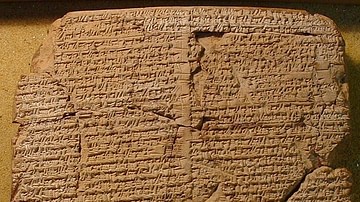
Ancient Mesopotamian Ghost Spell - Keeping the Dead Where They Belong
Medicine in ancient Mesopotamia was based on the belief that illness was caused by supernatural agencies and, although medicines were given and injuries treated, magical spells and incantations...

Article
The Ancient Celtic Pantheon
The ancient Celtic pantheon consisted of over 400 gods and goddesses who represented everything from rivers to warfare. With perhaps the exception of Lugh, the Celtic gods were not universally worshipped across Iron Age...
Definition
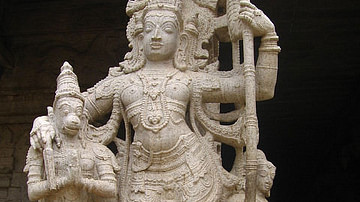
Rama - Seventh Avatar of Vishnu
Rama (or Ramacandra) is the seventh avatar of the Hindu god Vishnu. His adventures include the slaying of the demon king Ravana which is recounted in the Vana Parva of the Mahabharata and in the Ramayana, the oldest...
Definition
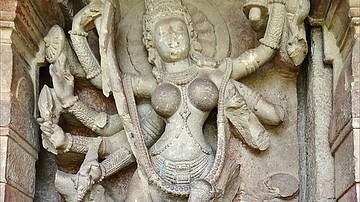
Devi
Devi, also known as Mahadevi or 'Great Goddess', is an all-embracing Mother Goddess first worshipped in India in Prehistoric times. In the Vedic period, she was assimilated into the Hindu pantheon and so came to represent the female energy...
