
Search
Did you mean: Consul?
Search Results

Article
The Crusades: Causes & Goals
The Crusades were a series of military campaigns organised by Christian powers in order to retake Jerusalem and the Holy Land back from Muslim control. There would be eight officially sanctioned crusades between 1095 CE and 1270 CE and many...
Article
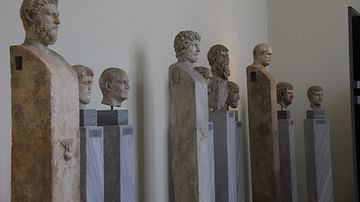
The Desecration of the Statues of Hermes, 415 BCE
On 7 June 415 BCE, various statues of the god Hermes were desecrated in Athens. The Peloponnesian War (431-404 BCE) had been raging for decades as one of the biggest civil wars in Ancient Greece, and the Athenians prepared for the expedition...

Article
Red Horse's Account of the Battle of the Little Bighorn
Red Horse (Tasunka Luta, l. c. 1822-1907) was a chief of the Miniconjou Lakota Sioux best known for his firsthand account of the Battle of the Little Bighorn (25-26 June 1876) and his 42 ledger book drawings depicting the engagement. The...

Article
The Crusades: Consequences & Effects
The crusades of the 11th to 15th century CE have become one of the defining events of the Middle Ages in both Europe and the Middle East. The campaigns brought significant consequences wherever they occurred but also pushed changes within...
Article
The Capture of Jerusalem, 1099 CE
The capture of Jerusalem from Muslim control was the primary goal of the First Crusade (1095-1102 CE), a combined military campaign organised by western rulers, the Pope, and the Byzantine Empire. After a brief siege, the city was captured...

Definition
Persepolis
Persepolis was the capital of the Persian Achaemenid Empire from the reign of Darius I (the Great, r. 522-486 BCE) until its destruction in 330 BCE. Its name comes from the Greek Perses-polis (Persian City), but the Persians knew it as Parsa...

Definition
William Wallace
Sir William Wallace (c. 1270-1305) was a Scottish knight and national hero who fought for his country's independence from England. Wallace famously led the Scots to victory against a larger English army at the Battle of Stirling Bridge in...

Definition
Artemisia I of Caria
Artemisia I of Caria (l. 480 BCE) was the queen of the Anatolian region of Caria (south of ancient Lydia, in modern-day Turkey). She is most famous for her role in the naval Battle of Salamis in 480 BCE in which she fought for the Persians...

Definition
Amaterasu - Shinto's Greatest Goddess
Amaterasu Omikami ('the Great Divinity Illuminating Heaven') is the sun goddess and most important deity of the Shinto religion. Amaterasu is the ruler of Takama no Hara (the High Celestial Plain), the domain of the kami or spirits. The most...

Definition
Jan Žižka
Jan Žižka (l. c. 1360 – 1424) was a Czech general and one of the most brilliant tacticians in military history. In the Hussite Wars (1419 to c. 1434), he was undefeated as the leader of the Hussites against the Catholic loyalists. Even completely...
