
Search
Remove Ads
Advertisement
Search Results

Definition
Bohemian Reformation
The Bohemian Reformation (c. 1380 to c. 1436) was the first concerted effort by Catholic clergy to reform the abuses and corruption of the medieval Church. Bohemian clerics and theologians called for reform and, like later...

Definition
Picts
The Picts were a people of northern Scotland who are defined as a "confederation of tribal units whose political motivations derived from a need to ally against common enemies" (McHardy, 176). They were not a single tribe, nor necessarily...
Definition
Kappa
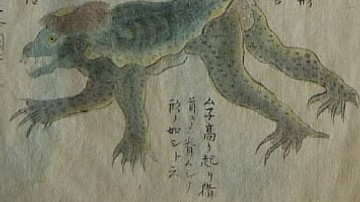
A kappa is a Japanese mythological water sprite or, literally, "river child" (河童). One of the more popularly known yōkai (Japanese mythological creature) in Japan, kappa are generally green or yellow, have a tortoise-like shell on their...

Definition
Portuguese Macao
Macao (Macau) is located on a peninsula in the estuary of the Pearl River delta in southeast China and it was a Portuguese colonial settlement from c. 1557 until 1999. Macao was a major trade hub of the Portuguese Empire and with...

Video
The History of Japanese Green Tea
Did you know that, according to legend, tea came from the eyelids of a monk? Green Tea in Japan has a long history, dating back to the 8th century where it began its importance in the country as a stimulant for...

Definition
Shimabara Rebellion
The Shimabara Rebellion was a peasant uprising that occurred from 17 December 1637 to 15 April 1638 in Japan's southern island of Kyushu. Economic desperation, famine, and religious persecution led the peasants of the Shimabara...

Definition
Fujiwara Clan
The Fujiwara clan (Fujiwara-shi) was a powerful extended family group which dominated all areas of Japanese government during the Heian Period (794-1185). Founded by Fujiwara no Kamatari in 645 CE, male members held on to key official...

Article
Japanese Castles
Fortifications of one kind or another had been used in Japan since ancient times, but in the period from 1576 until 1639, a new and distinctive style of castle was constructed. Rather than being used for fighting, these were impressive...

Article
Ming Taxation & the Silver Economy
The rulers of China's Ming dynasty (1368-1644) acquired an insatiable desire for silver in the 16th century, largely to pay for huge prestige projects like building the Forbidden City in Beijing and repairing the...
Video
Prince Shotoku: Japan's Golden Age
This video describes the reign of Prince Shotoku during Japan's Golden Age, and his influence in spreading Buddhism in Japan, followed by China.
