
Search
Did you mean: Serapis?
Remove Ads
Advertisement
Search Results

Image
Korean Celadon Maebyeong
A maebyeong celadon (greenware) vase from the Goryeo dynasty of ancient Korea. The inlay design has typical Buddhist motifs of cranes and clouds. Late 12th century CE. National Treasure No. 68. (Kansong Museum of Fine Arts...
Image
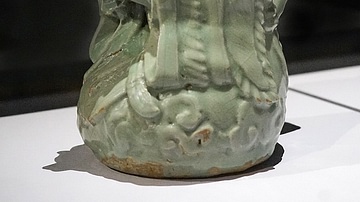
Taoist Figure Celadon Pitcher, Goryeo Dynasty
A celadon pitcher in the form of a Taoist figure. Goryeo Dynasty, 12th century CE, Korea. (National Museum of Korea, Seoul, South Korea)

Image
Dragon-Turtle Celadon
A celadon (greenware) ceramic kettle in the form of a mythical dragon-turtle creature. Korea, Goryeo dynasty, 918-1392.
National Museum of Korea, Seoul.

Video
Silla Earthenware
Gray-blue, unpolished earthenware objects were crafted in the Gyeongsang-do region during the Silla period, and they are generally referred to as Silla earthenware. Silla earthenware was first made mainly in the Gyeongju and...
Image
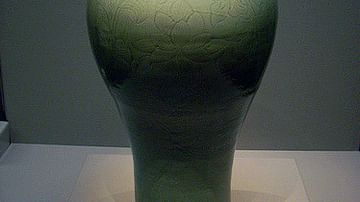
Maebyeong Celadon Vase, Goryeo Dynasty
A maebyeong celadon vase with lotus decoration. 12th century CE, Goryeo Dynasty, Korea. (National Museum of Korea, Seoul, South Korea)
Image
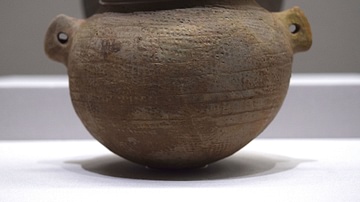
Ancient Korean or Japanese Jar
This jar was excavated from a box-style stone coffin in Daishogunyama Tumulus on Tsushima, the Japanese island closest to the Korean peninsula. Its round body was created by lightly beating the outer surface of the...
Image
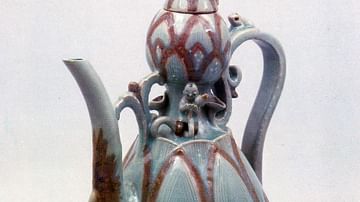
Celadon Ewer, Goryeo Dynasty
A celadon gourd-shaped ewer deocrated with lotus petals. 13th century CE, Goryeo Dynasty, Korea. (Leeum, Samsung Museum of Art, Seoul, South Korea)
Image
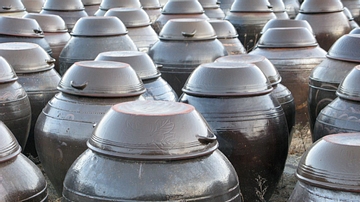
Korean Onggi Jars
Korean onggi lidded-jars, made since ancient times they are used for a multitude of purposes and carry simple decoration.

Video
Korean Pottery : Goryeo Celadon
The best of Goryeo inlaid celadon is breathtaking in its splendid presentation of clean form, vibrant design, and subtle yet alluring colour combination of white, black, and green. Today, Gangjin remains the centre...

Book Review
Teotihuacan: City of Water City, of Fire
Teotihuacan is not even that old, but its origins are already obscure. Founded in the 1st century CE and located within the Valley of Mexico, Teotihuacan was once the “most populous city in the Americas,” and...
