
Search
Remove Ads
Advertisement
Search Results
Image
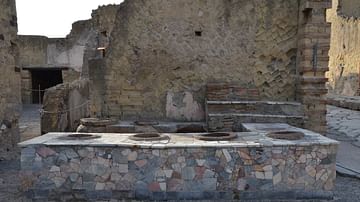
A Thermopolium in Herculaneum
The remains of a thermopolium (cook-shop) that sold food and drink in Herculaneum. Eight earthenware jars that would have contained cereals, vegetables and ready-to-eat food are set in the counter.
Image
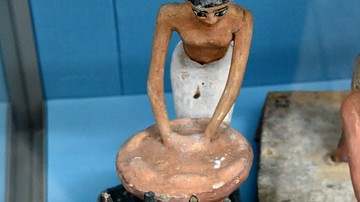
Egyptian Model of Servant Brewing Beer
This painted wooden model depicts a woman straining mash. There are eleven jars of beer in front of her. Old Kingdom, 6th Dynasty, 2345-2181 BCE. From tomb 45 at Asyut, modern-day Egypt. (The British Museum...
Image
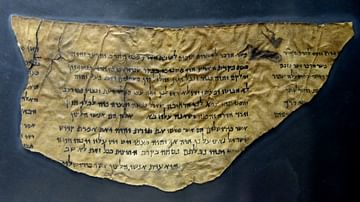
Dead Sea Scroll of Pesher Isaiah
This is part of Pesher Isaiah, scroll number 4Q162, which was found in Cave 4 at Qumran (Khirbet Qumran or Wadi Qumran). A pesher is a type of commentary. The Dead Sea Scrolls are ancient Jewish religious manuscripts...

Image
Storerooms of the Palace of Knossos
View of the storerooms of the Palace of Knossos with their rows of storage jars which would have held oil or wine.
Image
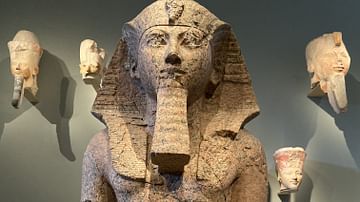
Kneeling Statue of Hatshepsut
This is a large, kneeling statue of Hatshepsut that was found during excavations of her temple at Deir el-Bahri. In this statue, Hatshepsut is depicted wearing the nemes headcloth, a false beard on her chin, andis kneeling...
Image
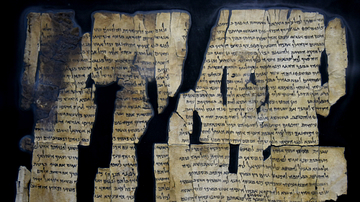
Dead Sea Scroll 28 from Qumran
This is Dead Sea Scroll number 28a (1Q28a), which was found in Cave 1 at Qumran (Khirbet Qumran or Wadi Qumran). The Dead Sea Scrolls are ancient Jewish religious manuscripts. The majority were written in Hebrew script...

Definition
Godin Tepe
Godin Tepe is, today, an archaeological site in the Kangavar valley of Luristan, in western central Iran. The name means "hill of Godin" though what the settlement was called originally is unknown. The site was first discovered in...

Image
Coricancha, Cuzco
One of the reconstructed temples from Coricancha, the sacred Inca precinct at Cuzco. 15th century CE.

Image
Inca 12 Angle Stone
The famous stone from an Inca wall in Cuzco, Peru. The stone has 12 angles and illustrates the great precision Inca masons employed in ensuring their stone blocks fitted so well together that no mortar was needed. (15th century...
Image
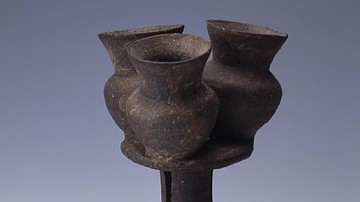
Sueki Stoneware from the Kofun Period
Three jars on pedestal platform, made of high-fired stoneware with natural ash glaze, from early 6th century Kofun Period Japan.
