
Search
Search Results

Image
New York Postmaster's Provisional Stamp, 1845
New York Postmaster's Provisional Stamp, USA, 1845. The kind of stamp that may have been used to send enslaved people, such as William "Box" Peel Jones to freedom in 1859.

Image
Jewish Bread-Stamp from Sardis
In the Late Roman Period, the Jewish faith was expressed through symbols of personal items in much the same way as for Christianity. The Jewish "Menorah" is depicted on this bread-stamp. The stamp bears the name of "Leontios", which perhaps...

Article
Roman Walls
The many Roman walls still visible today throughout Europe and the Mediterranean, be they defensive walls such as the Servian Wall or house and monument walls, tell us a great deal about the evolution of Roman construction techniques. Roman...
Image
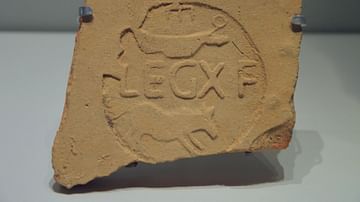
Stamp of Legio X Fretensis
Tile fragment with a stamp of Legio X Fretensis, "LG X F", and its symbol, a wild boar and a battleship. Found in Jerusalem, 1st-2nd century CE. Israel Museum, Jerusalem.
Image
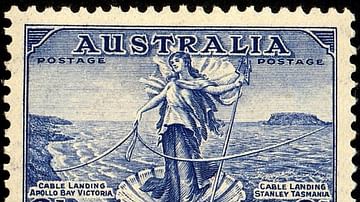
Amphitrite on 1936 Australian Stamp
A scan of a 1936 Australian postage stamp commemorating the opening of the undersea cable from Tasmania (Stanley) to the mainland (Apollo Bay, Victoria) depicting Amphitrite.
Image
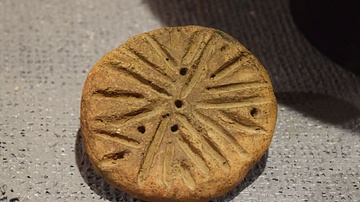
Ancient Stamp Seal from Armenia
This clay stamp seal was made in what is now present-day Armenia around the 4th-3rd century BCE. (Metsamor Historical-Archaeological Museum-Reserve, Taronik, Armenia)
Image
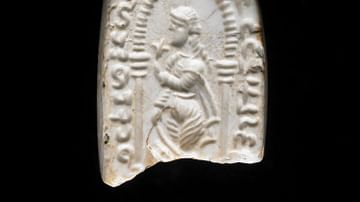
Sassanian Stamp Seal
Fragment of white jasper stamp seal, oval shape with one end cut off straight; engraved with a woman.
Early Sassanian, 4th century CE.
Image
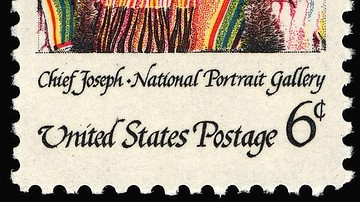
Chief Joseph US Postage Stamp
6c Cyrenius Hall "Chief Joseph" single, US postage stamp, issued 4 November 1968.
Smithsonian National Postal Museum.

Article
Roman Women in Business
Roman women faced legal, ideological, and cultural limitations in several areas of their lives; deep-rooted traditions regarding the role of women in the Roman world resulted in pre-conceived views which saw women characterised by weakness...
Image
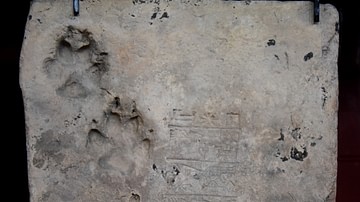
Mud-Brick With a Dog's Paw Print from Ur
Mud brick stamped with the name and titles of the Neo-Sumerian king Ur-Nammu (r. 2047-2030 BCE, short chronology) from the ziggurat of Ur, southern Mesopotamia, Iraq. Note the dog's paw print; this "footprint" might well have been "stamped"...
