
Search
Did you mean: Tenjin?
Remove Ads
Advertisement
Search Results

Definition
Venus
In Roman mythology, Venus was the goddess of love, sex, beauty, and fertility. She was the Roman counterpart to the Greek goddess Aphrodite. However, Roman Venus had many abilities beyond the Greek Aphrodite; she was a goddess of victory...

Definition
Ashur - The First Great Assyrian City
Ashur (also known as Assur) was an Assyrian city located on a plateau above the Tigris River in Mesopotamia (today known as Qal'at Sherqat, al-Shirqat District, northern Iraq). The city was an important center...

Definition
Kykeon
Kykeon (from the Greek “to mix, stir”) was a beverage of water and barley (sometimes flavored with mint or thyme) popular among the working, 'lower' class of ancient Greece. In Homer's Illiad it is described as a mixture of water, barley...
Definition
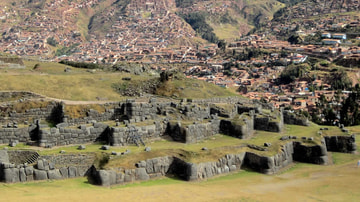
Sacsayhuaman
The Sacsayhuaman (also Saksaywaman or Saqsawaman, meaning 'Royal Eagle') fortress-temple complex lies at the northern edge of the former Inca capital Cuzco. Constructed during the reign of Pachacuti (1438-1471 CE) and his successors...

Definition
Aphrodite
Aphrodite was the ancient Greek goddess of love, beauty, desire, and all aspects of sexuality. She could entice both gods and men into illicit affairs with her beauty and whispered sweet nothings. Aphrodite was born near Cyprus from...

Definition
Tairona Civilization
The Tairona civilization - one of the Chibcha family tribes - flourished in northern Colombia between 200 CE and 1600 CE. Like the Muisca of Cundinamarca, the Tairona were known for their expertise in crafting and metallurgy...

Definition
Sargon II
Sargon II (r. 722-705 BCE) was one of the most important kings of the Neo-Assyrian Empire as founder of the Sargonid Dynasty which would rule the empire for the next century until its fall. He was a great military leader, tactician...

Definition
The Ankh
The Ankh is one of the most recognizable symbols from ancient Egypt, known as "the key of life" or "cross of life" and dated to the Early Dynastic Period (c. 3150 - 2613 BCE). It is a cross with a loop at the top sometimes ornamented...

Definition
Xenophon
Xenophon of Athens (l. 430 to c. 354 BCE) was a contemporary of Plato and a fellow student of Socrates. He is best known for his Anabasis (The March Up Country) detailing the retreat of the Ten Thousand Greek mercenaries after the defeat...

Definition
Etruscan Art
The art of the Etruscans, who flourished in central Italy between the 8th and 3rd century BCE, is renowned for its vitality and often vivid colouring. Wall paintings were especially vibrant and frequently capture scenes of Etruscans...
