
Search
Remove Ads
Advertisement
Search Results

Article
Ten Ancient Egypt Facts You Need to Know - Fun Trivia About Ancient Egypt
Ancient Egypt is defined as the civilization that flourished in North Africa between circa 6000 and 30 BCE – from the Predynastic Period in Egypt (circa 6000 to circa 3150 BCE) through...

Article
Why Kokopelli is Not Kokopelli: Paiyatamu & The Four Flutes
The iconic image of Kokopelli, the flute-playing kachina spirit of the Pueblo peoples, specifically the Hopi, is easily the most recognizable figure from Native American culture in the Southwest...

Article
Coal Mining in the British Industrial Revolution
Coal mining boomed during the British Industrial Revolution as it provided fuel for steam engines of all kinds in factories, transport, and agriculture. Draining flooded mines to extract more coal was...

Article
Dadan, Tayma, Khaybar, Qurh & Old Town AlUla - More Stunning Sites at AlUla, Saudi Arabia
Khaybar, Tayma, Dadan, Qurh, and AlUla Old Town are sites situated in the AlUla region of Saudi Arabia, an area on the ancient incense trade routes. Khaybar and Tayma are...

Article
Slavery in the Roman World
Slavery was an ever-present feature of the Roman world. Slaves served in households, agriculture, mines, the military, workshops, construction and many services. As many as 1 in 3 of the population in Italy or 1 in 5 across...
Article
Sugar & the Rise of the Plantation System
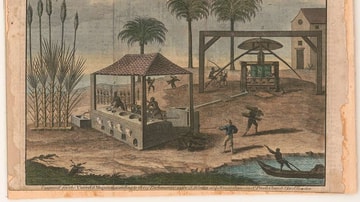
From a humble beginning as a sweet treat grown in gardens, sugar cane cultivation became an economic powerhouse, and the growing demand for sugar stimulated the colonization of the New World by European powers...

Article
Prehistoric Alpine Stilt Houses
Alpine stilt houses are a unique and fascinating aspect of prehistoric architecture in the Alps, which provide valuable insights into the lives and culture of the ancient communities. The houses were built by prehistoric...

Article
Trade in the Roman World
Regional, inter-regional and international trade was a common feature of the Roman world. A mix of state control and a free market approach ensured goods produced in one location could be exported far and wide. Cereals...
Article
The Spartacus Revolt
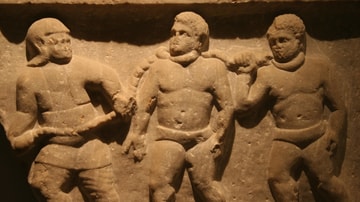
The revolt of the gladiator Spartacus in 73-71 BCE remains the most successful slave revolt in the history of Rome. The rebellion is known as the Third Servile War and was the last of three major slave revolts which Rome suppressed...

Article
Roman Mills
The Romans constructed mills for use in agriculture, mining and construction. Around the 3rd century BCE, the first mills were used to grind grain. Later developments and breakthroughs in milling technology expanded their use to crushing...
