
Search
Remove Ads
Advertisement
Search Results

Definition
Stakhanovite Movement - Labour Productivity in Stalin's USSR
The Stakhanovite movement took its name from the Soviet coal miner Alexei Stakhanov (1906-1977), who produced a prodigious amount of coal in a single shift in August 1935. Championed as an example...

Definition
Mythology
Myths are a part of every culture in the world and are used to explain natural phenomena, where a people came from and how their civilization developed, and why things happen as they do. At their most basic level, myths comfort by...

Definition
Mitanni
The Kingdom of Mitanni, known to the people of the land, and the Assyrians, as Hanigalbat and to the Egyptians as Naharin and Metani, once stretched from present-day northern Iraq, down through Syria and into Turkey and was among the...

Definition
Roman Art
The Romans controlled such a vast empire for so long a period that a summary of the art produced in that time can only be a brief and selective one. Perhaps, though, the greatest points of distinction for Roman art are its very diversity...
Definition
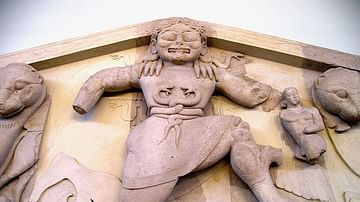
Corcyra - The Ancient City-State of Corfu
Corcyra (modern Corfu and also known as Kerkyra) located in the Ionian sea is one of the northern most Greek islands and was an important polis or city-state in the Archaic and Classical periods. Possessing...

Definition
Roman Science
The Romans assimilated earlier Greek science for their own purposes, evaluating and then accepting or rejecting that which was most useful, much as they did in other fields such as warfare, art, and theatre. This assimilation of...
Definition
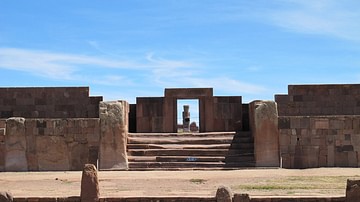
Tiwanaku
Tiwanaku (or Tiahuanaco) was the capital of the Tiwanaku empire between c. 200 - 1000 CE and is situated in the Titicaca basin. At an altitude of 3,850 metres (12,600 ft) it was the highest city in the ancient world and had a peak population...

Definition
Pliny the Elder
Aside from the usual contributions of its noble politicians and military commanders, the story of a nation also records the invaluable literary influences of its poets, dramatists, and historians. The long history of the Roman...

Definition
Persis
Persis (in Greek, derived from Persian pars) is the ancient name of the approximate area of modern Fars in Central Iran, as well as a state of the Hellenistic and Imperial periods in this same province. Its name is derived from the Persians...

Definition
Jomon Period
The Jomon Period is the earliest historical era of Japanese history which began around 14500 BCE, coinciding with the Neolithic Period in Europe and Asia, and ended around 300 BCE when the Yayoi Period began. The name Jomon, meaning...
