
Search
Remove Ads
Advertisement
Search Results
Image
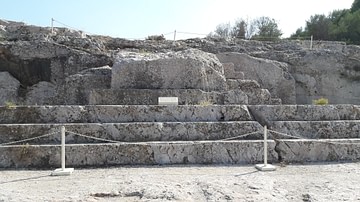
Speaker's Platform at the Athenian Assembly
Stone cut steps leading up to the speaker's platform at the Athenian Assembly on Pynx
Image
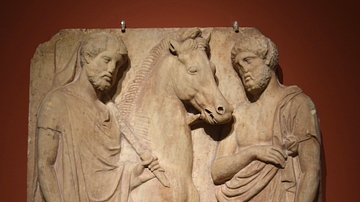
Athenian Horseman Grave Stele
The marble grave stele of an Athenian horseman. Attica, 370s BCE. (Pushkin Museum, Moscow)

Image
Propylaea, Athenian Acropolis
The Propylaea, the monumental gate to the acropolis of Athens. Interior (west) view. Architect: Mnesicles, c. 437–431 BCE.

Image
Athenian Silver Tetradrachm
Silver tetradrachm from Athens, 479-454 BCE. O: Head of Athena. R: Owl and olive branch.

Image
Archaic Sphinx, Athenian Acropolis
Archaic period sphinx (6th century BCE), Acropolis Museum, Athens.

Definition
Cimon
Cimon (c. 510 – 450 BCE) was an Athenian statesman and, as strategos, frequent commander of the Athenian fleet when the city was at the height of its power. He won military glory by defeating Spartan rival Pausanias and then the Persians...

Image
Agora and Acropolis of Corinth
The Agora, or Roman Forum, was the heart of the ancient city of Corinth. It is located south of the Temple of Apollo. In the background, the Acrocorinth, a monolithic rock overseeing the city (Greece).

Image
Agora Film Poster
A promotional poster for the 2009 film Agora about the life of Hypatia of Alexandria (c. 370-415 CE).
Image
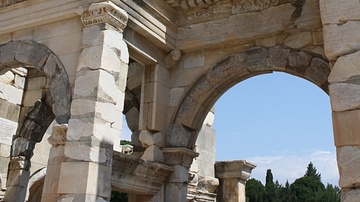
Agora Gate, Ephesos
The Mazeus-Mithridates Gate, consisting of three arched entrances, led from the library of Celsus to the Roman Agora of Ephesos. It was built by and named after two emancipated slaves of emperor Augustus in 4 or 3 BCE, who...
Image
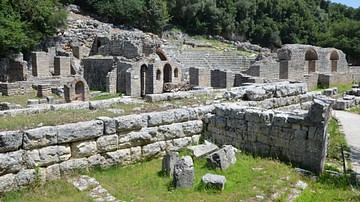
Agora and Roman Forum, Butrint
The Agora of Butrint (Albania) with the Roman Forum and the Sanctuary of Asclepius in the background.
