
Search
Remove Ads
Advertisement
Search Results

Definition
Crates of Thebes
Crates of Thebes (l. c. 360-280 BCE) was one of the most important Cynic philosophers of ancient Greece. He was born to a wealthy family in Thebes but gave away his inheritance after realizing the futility of material possessions...

Definition
Greek Dark Age
The Greek Dark Age (c. 1200 to c. 800 BCE, overlapping with the Iron Age, c. 1200-550 BCE) is the modern-day term for the period in Greek history following the Bronze Age Collapse when the Mycenaean Civilization fell and the Linear...

Definition
Darius I
Darius I (l. c. 550-486 BCE, r. 522-486 BCE), also known as Darius the Great, was the third Persian King of the Achaemenid Empire. His reign lasted 36 years, from 522 to 486 BCE; during this time the Persian Empire reached its peak...
Definition
Pelopidas
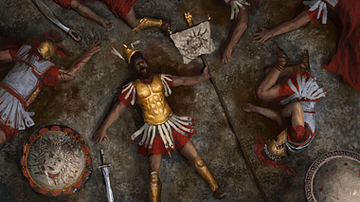
Pelopidas (c. 410 - 364 BCE) was a gifted Theban general and leader of the elite Sacred Band who, along with Epaminondas, is credited with helping Thebes rise to its greatest power. Defeating the mighty Spartans in several battles...

Definition
Statue of Zeus at Olympia
The monumental statue of Zeus at Olympia in Greece was one of the Seven Wonders of the Ancient World. Created in the 430s BCE under the supervision of the master Greek sculptor Phidias, the huge ivory and gold statue was...

Definition
Women of Trachis
Women of Trachis is a Greek tragedy, one of Sophocles' (c. 496 BCE - c. 406 BCE) lesser-known works, the only one that does not deal with the aftermath of the Trojan War, rather it is concerned with the death of the Greek hero...

Definition
Electra by Euripides
Electra is a Greek tragedy written by the playwright Euripides, c. 420 BCE. It retells the classic myth concerning the plotting of Electra and her brother Orestes to kill their mother and her lover. This version of the story...

Definition
Aeschylus
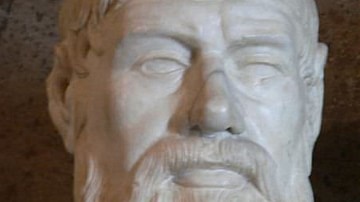
Aeschylus (c. 525 - c. 456 BCE) was one of the great writers of Greek Tragedy in 5th century BCE Classical Athens. Known as 'the father of tragedy', the playwright wrote up to 90 plays, winning with half of them at the great Athenian...
Definition
Pausanias (General)
Pausanias (c. 510 - c. 465 BCE) was a Spartan regent and general who won glory by leading a combined Greek force to victory over the Persians at the Battle of Plataea in 479 BCE. Famously immodest regarding his own talent...

Definition
Ancient Greek Warfare
In the ancient Greek world, warfare was seen as a necessary evil of the human condition. Whether it be small frontier skirmishes between neighbouring city-states, lengthy city-sieges, civil wars, or large-scale battles between...
