
Search
Did you mean: Tara?
Remove Ads
Advertisement
Search Results

Definition
Egyptian Faience
Egyptian faience is a glassy substance manufactured expertly by the ancient Egyptians. The process was first developed in Mesopotamia, first at Ur and later at Babylon, with significant results but faience production reached its...

Definition
Pietro Perugino
Pietro Perugino (c. 1450-1523), real name Pietro di Cristoforo Vannucci, was an Italian Renaissance artist who created frescoes for the Vatican's Sistine Chapel and was in demand across Italy to decorate church interiors and produce...

Definition
Persepolis
Persepolis was the capital of the Persian Achaemenid Empire from the reign of Darius I (the Great, r. 522-486 BCE) until its destruction in 330 BCE. Its name comes from the Greek Perses-polis (Persian City), but the Persians knew...

Article
Cultural Links between India & the Greco-Roman World
Cyrus the Great (558-530 BCE) built the first universal empire, stretching from Greece to the Indus River. This was the famous Achaemenid Empire of Persia. An inscription at Naqsh-i-Rustam, the tomb...

Definition
Ancient Korean Sculpture
The sculpture of ancient Korea was dominated by Buddhist themes such as figurines and monumental statues of the Buddha and his followers, and large bronze bells for temples. Gilded-bronze was the most common material used...

Definition
Hans Holbein the Younger
Hans Holbein the Younger (c. 1497-1543 CE) was a German Renaissance painter who is most famous for his portraits. A versatile artist and superb draughtsman, Holbein was accomplished in different mediums from woodcut engravings...

Definition
Ancient Egyptian Architecture
Ancient Egyptian architecture is often associated closely with the pyramids of Giza but was actually quite diverse, taking a number of forms in the construction of administrative buildings, temples, tombs, palaces...

Definition
Hephaistos
Hephaistos (Hephaestus) was the ancient Greek god of fire, metallurgy, and crafts. He was the brilliant blacksmith of the Olympian gods, for whom he fashioned magnificent houses, armour, and ingenious devices. Hephaistos had his workshop...
Definition
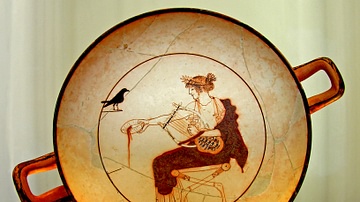
Lyre
The lyre was a stringed musical instrument played by the ancient Greeks. It was probably the most important and well-known instrument in the Greek world. The lyre was closely related to the other stringed instruments: the chelys which...
Definition
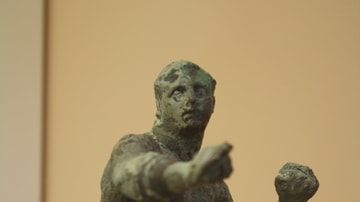
Pankration
Pankration is an ancient martial art which mixes wrestling and boxing. The sport can be traced as far back as the second millennium BCE in the territory of ancient Greece. Its name derives from the ancient Greek words pan (all) and...
